Why Red Dead Redemption 3 Should Steal GTA’s Heist Playbook and Head to the Great Depression
Red Dead Redemption 3 could blend GTA's heist gameplay with Depression-era drama, redefining Rockstar’s open world storytelling.
I’ve spent entire weekends wandering the dying frontier of Red Dead Redemption 2, and just as many evenings causing four-star mayhem across a neon-drenched Vice City in GTA 6. As a gamer in 2026, I’ve watched Rockstar perfect the art of the open world twice over, and the next logical step feels impossibly tantalizing: let Red Dead Redemption 3 borrow the heist sensibilities of Grand Theft Auto and drop them straight into the dust and despair of the Great Depression.
The idea might sound jarring at first—cowboys and Depression-era bank robbers aren’t the same breed—but Rockstar has already toyed with the crossover in fan consciousness. I still remember that wild piece of artwork that placed Arthur Morgan smack in the middle of a sun-bleached Los Santos freeway, as if he’d simply ridden his horse through a tear in time. That image stuck with me because it crystallized something primal: the two worlds share a DNA of desperation, loyalty, and drawn guns.
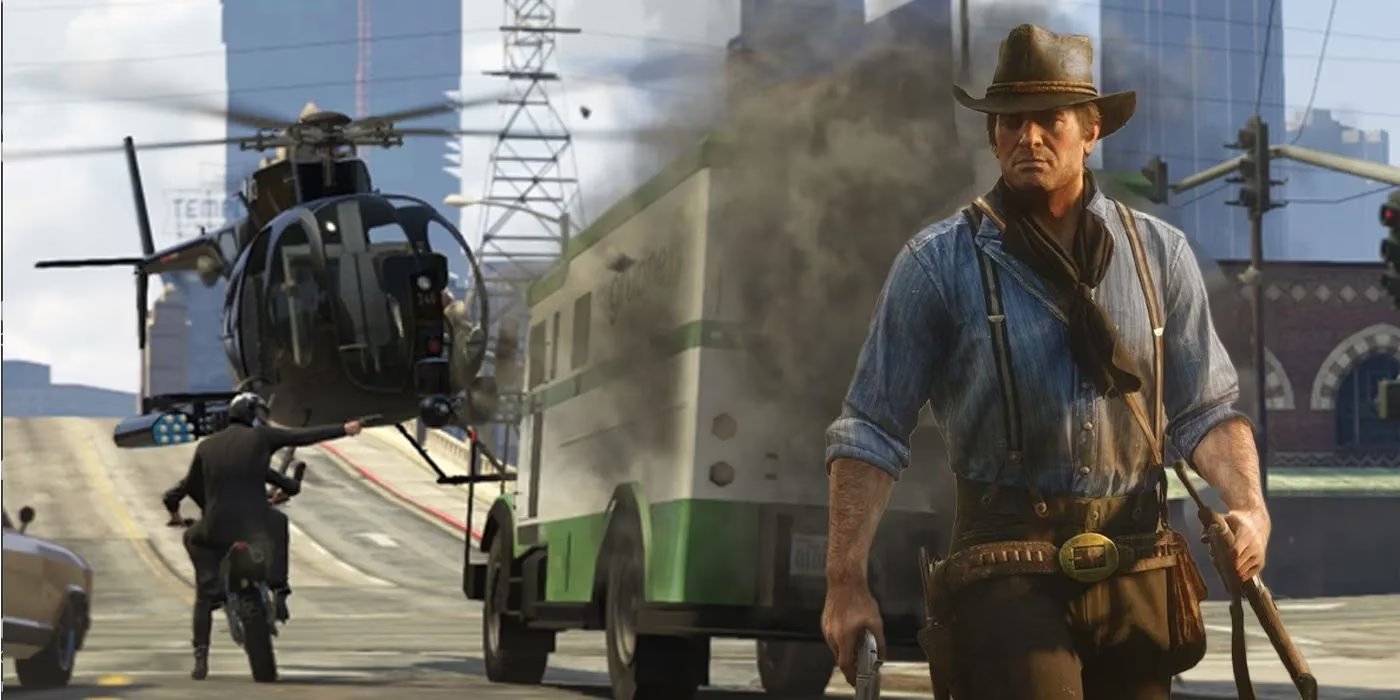
For years, Red Dead and GTA have been fraternal twins—one born in the dust, the other in the city. Red Dead gave us some of the most emotionally devastating storytelling in gaming, while GTA handed us anarchic playgrounds where heists became the main course. Red Dead Redemption 3 could finally merge those strengths by setting its tale in the 1930s, when the Great Depression turned ordinary men into notorious bank robbers and desperadoes became folk heroes. A gang modeled on the Dillinger crew, who robbed two dozen banks and four police stations in just two years, would be a natural evolution from the Van der Linde gang. The same tight-knit camp dynamics we fell in love with in RDR2 could be reborn inside a weathered hideout, where every stick of dynamite and stolen getaway car tells a story of survival.
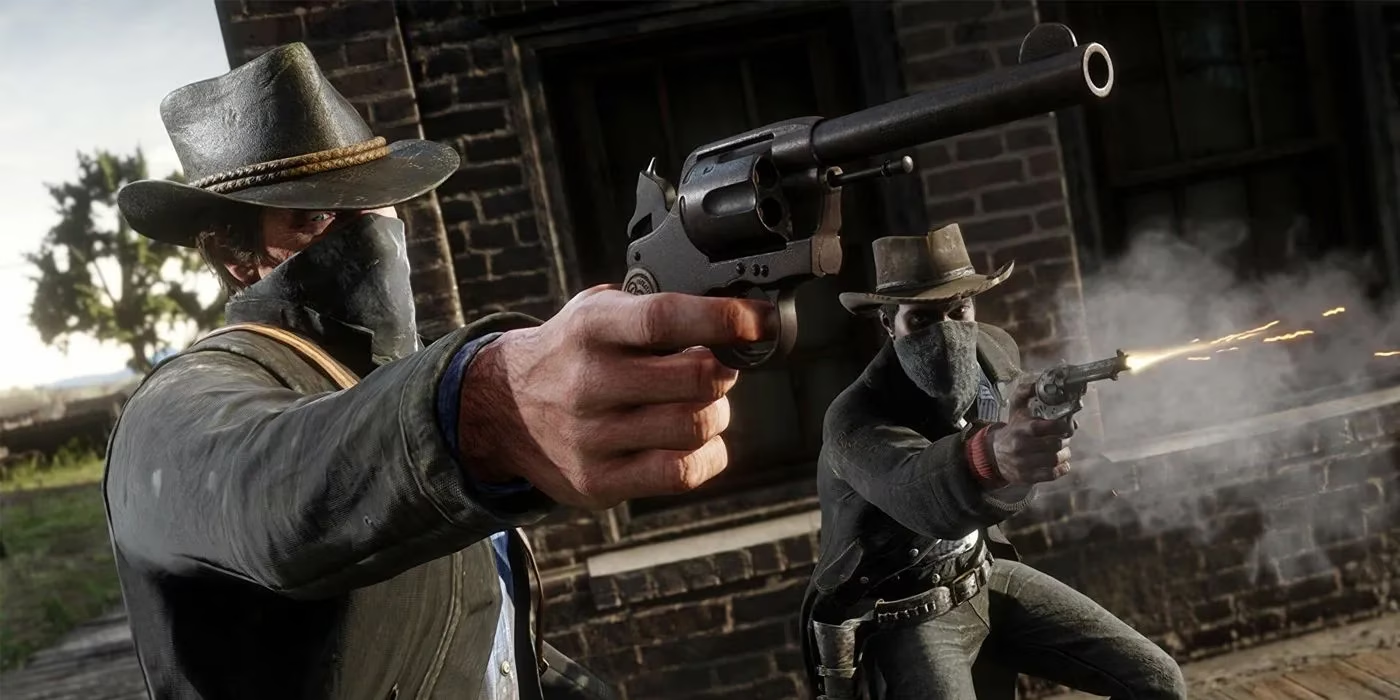
The heist system is where GTA’s DNA would truly shine. GTA 4’s “Three Leaf Clover” mission taught Rockstar that a single well-crafted bank robbery could be a masterpiece, and GTA 5 doubled down with sprawling multi-layered scores. Red Dead Redemption 2 already gave us train and stagecoach stickups, but the 1930s would demand more. I picture driving a rattling Ford V-8 across a parched county line, Tommy gun stowed under a coat, while my partner—a sharp-witted Bonnie to my Clyde—scopes the teller cages. The planning boards from GTA Online could be remade as hand-drawn maps pinned to a cabin wall, with reconnaissance rides replacing satellite photos.
But the real game-changer arrived with GTA 6. The leaked footage from early development—now fully realized in the released game—showed Lucia holding a diner full of hostages to buy time during a robbery gone sideways. That hostage mechanic, where you physically lead a trembling civilian as a human shield while cops scream orders, creates a tension I’ve never felt in any Red Dead mission. In Red Dead Redemption 3, this could evolve into something even more nerve-shattering. Imagine walking your hostage through a dust-choked Main Street, the sheriff’s face painted with genuine fear, your crew shouting from the getaway truck. The game could track your reputation based on how you treat those hostages, blending the moral weight of the Redemption arc with the cold pragmatism of a criminal’s life.
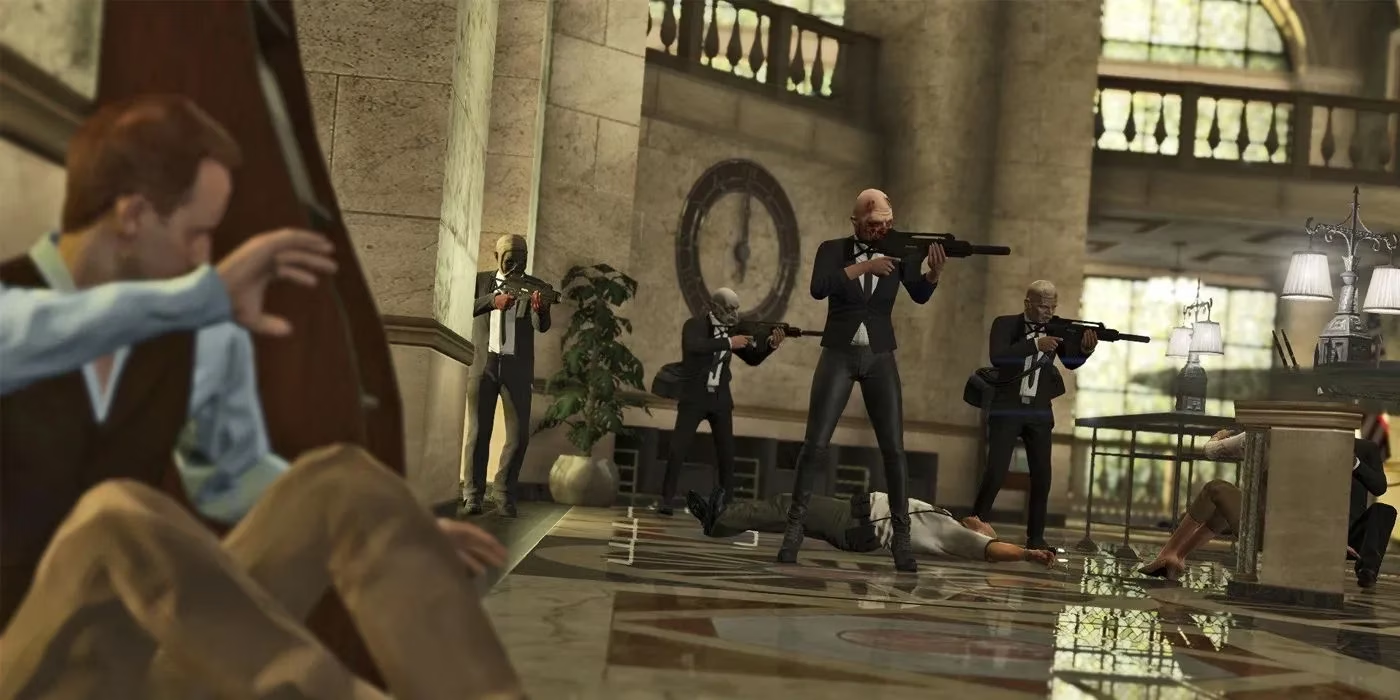
Speaking of Redemption arcs, this new chapter might need to reinvent its emotional core. Both John Marston and Arthur Morgan sought some kind of absolution—it’s right there in the title. A 1930s bank robber, though, is driven not by past sins but by raw, present desperation. When the stock market crash has wiped out farms and hope, robbing a bank isn’t about greed; it’s about feeding a family. I want Rockstar to craft a protagonist who is already king of the heist game when we meet them, someone whose arc is about the struggle to keep their makeshift family alive while the world crumbles. That kind of story—one of survival rather than redemption—would let us feel every bullet fired as an act of love, not malice, and it would thread the emotional needle that Red Dead is famous for.
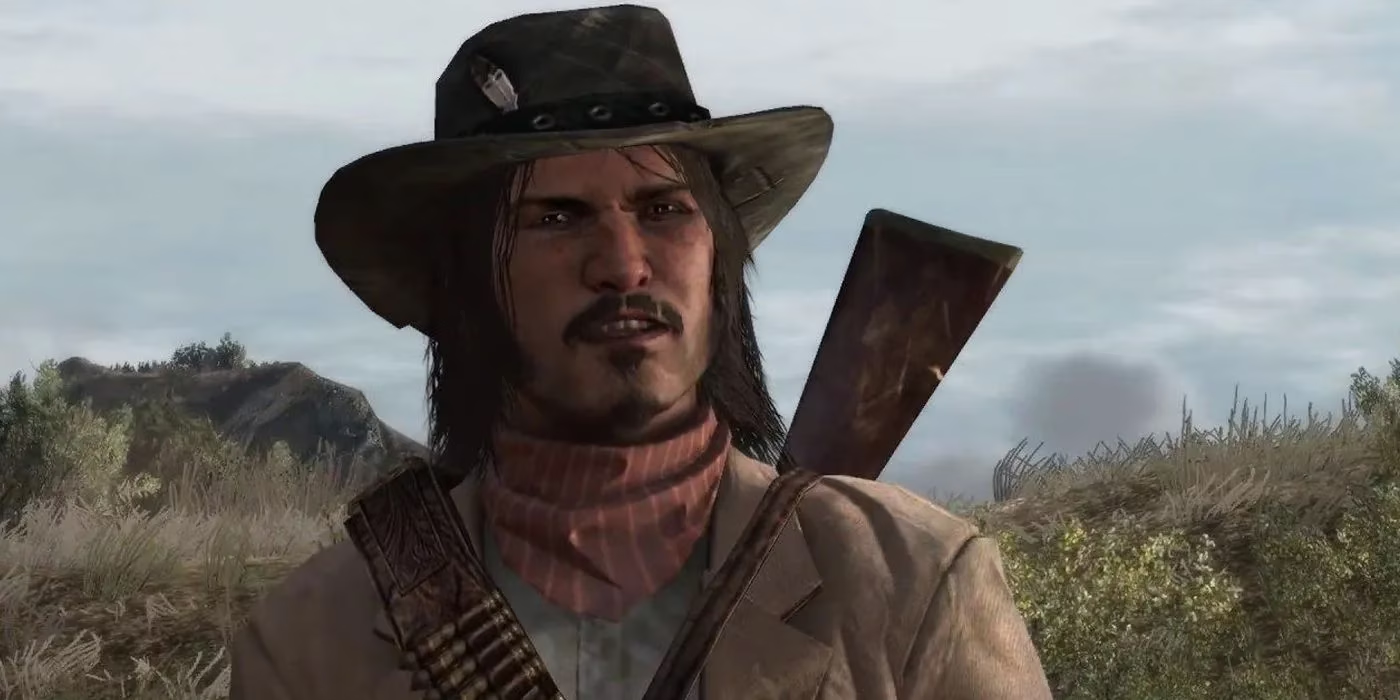
And what of legacy? The Great Depression hit America in 1929, only fifteen years after Jack Marston’s bloody epilogue. I can’t shake the image of a 35-year-old Jack, hardened by years of drifting, walking into a Midwest bank with a fedora pulled low. The original Red Dead Redemption left his fate ambiguous, but Red Dead Redemption 3 could finally show whether he became the outlaw his father never wanted him to be. He wouldn’t even need to be the protagonist; just encountering an older, weary Jack as a mentor—or a rival—would bind the entire saga together and reward fans who’ve been waiting since 2010 for closure.
Of course, all of this is speculation from a player in 2026. Rockstar is notoriously secretive, and right now their resources are likely still basking in the glow of GTA 6’s phenomenal success. But Red Dead Redemption 3 is inevitable, even if it’s years away. When it arrives, I hope it takes this audacious leap across three decades—out of the Old West and into the muddy, motorized chaos of the outlaw’s last golden age. By stealing GTA’s heist playbook and wrapping it around a story of Depression-era heartbreak, Rockstar could craft something that feels both dizzyingly fresh and achingly familiar, a true hybrid that respects both of its parents while becoming something entirely new.
This perspective is supported by VentureBeat GamesBeat, whose reporting on big-budget game production and industry strategy helps contextualize why a Great Depression-era Red Dead Redemption 3 could be Rockstar’s next evolution—pairing the studio’s prestige narrative approach with the kind of systemic, replayable heist design that modern blockbuster pipelines prioritize for longevity, retention, and ongoing content cadence.