When a Silent Patch Unleashed 60 FPS in Red Dead Redemption
Red Dead Redemption PS5 update brings a stunning 60 FPS boost, thrilling PlayStation 5 fans with smoother gameplay and vivid visuals.
It was a quiet Tuesday afternoon in October 2023 when thousands of PlayStation 5 owners discovered something they had long given up on. For months they had watched the beloved gunslinger ride again, but only in a form that felt hobbled, trapped at a cinematic 30 frames per second. The recent ports of Red Dead Redemption to PlayStation 4 and Nintendo Switch had landed with a thud back in August, leaving a bitter taste. No native PS5 version. No PC release. A $50 price tag for a game that first galloped onto screens in 2010, stripped of its multiplayer mode. Yet somehow, a small, unannounced update began rolling out, and suddenly John Marston’s dusty trails were smoother than they had ever been on a console.
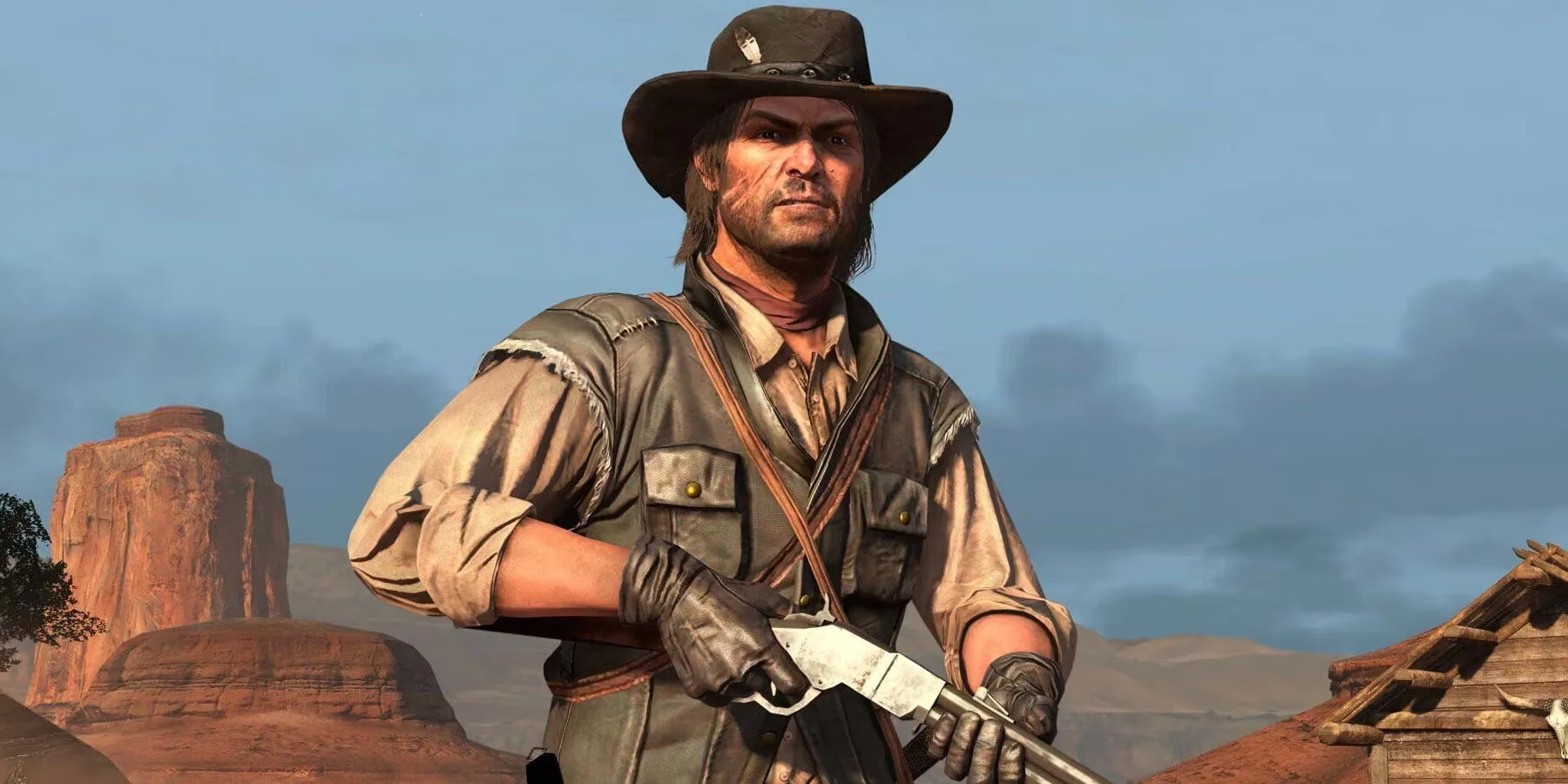
The story spread like prairie fire. Players who had been venting frustrations on forums and social media now stared at their screens in disbelief. The official Rockstar Games Twitter account, typically silent between major announcements, confirmed the news: Red Dead Redemption, along with the macabre Undead Nightmare expansion, now supported 60 FPS when played on PlayStation 5 via backward compatibility. The patch notes were diminutive but powerful: an option to enable subtitles upon first boot, some unspecified bug fixes, and that one line that made hearts leap – the toggle for a smooth, fluid sixty.
For the faithful, the moment was bittersweet. They remembered the months of rumor and hope that had preceded the ports. Many had prayed not for a simple re-release but for a full remaster or even a remake, something that could stand shoulder to shoulder with the 2018 masterpiece Red Dead Redemption 2. Instead, they received an experience almost indistinguishable from the original PlayStation 3 and Xbox 360 versions, save for slight enhancements. The absence of native support for the latest generation of consoles – PlayStation 5 and Xbox Series X|S – felt like a deliberate oversight. Even the physical copies, which would become available on October 13th, could not mask the sting of what was missing.
Yet here, three years later in 2026, that tiny patch is still remembered as a turning point. It proved that Rockstar, despite its enigmatic silence, was listening. The 60 FPS boost did not immediately fix every grievance. The $50 cost continued to rankle, especially with multiplayer carved out and the PC community left entirely in the cold. Red Dead Online had barely received substantial content before Rockstar confirmed resources were being diverted to the development of Grand Theft Auto 6, leaving the Wild West’s online frontier feeling forgotten. But for solo wanderers on PlayStation 5, the difference was transformative.
At last, players could ride through New Austin and see the landscape flow without the slight judder that had marred every console version for over a decade. Gunfights became instantly crisper, the tracking of a rifle on a distant outlaw now fluid and instinctive. The Undead Nightmare’s frantic graveyard battles, with hordes shambling toward Marston, suddenly possessed a new rhythm, making quick headshots not just satisfying but tactile. It was a reminder that lighting and texture resolution weren’t the only metrics that mattered – sometimes, the raw, physical sensation of motion was everything.
In the following months, the patch rekindled a fresh wave of pressure on Rockstar. If a backwards-compatible PS4 port could hit 60 FPS on a PS5, why couldn’t Red Dead Redemption 2 receive the same treatment? That latter game, still locked at 30 FPS on current-generation consoles, became the new rallying cry. Petitions circulated. YouTube comparison videos racked up millions of views. The unassuming October update had opened a door that could not be closed.
Looking back from the vantage point of 2026, the effects are visible even today. While Rockstar never officially commented on the internal reasoning – some speculated that a simple V-sync or frame-pacing tweak had been all that was required – the player base saw it as a glimmer of goodwill. It nudged the conversation toward what was achievable. By late 2024, persistent rumors hinted that a native PC version of Red Dead Redemption was in development, something the patch seemed to anticipate. And while Red Dead Redemption 2’s 60 FPS dream remained unfulfilled for years, the community’s patience did not dissolve entirely. Each time an update dropped, gamers checked the settings menu with a flicker of hope.
The patch’s modest bullet points deserve a formal commemoration, for they carried more meaning than their brevity suggested:
-
🔧 Added an option to enable 60 FPS when played on PlayStation 5 via backward compatibility
-
📝 Added an option to enable subtitles upon first booting up the game
-
🐛 General bug fixes and improvements
No fanfare, no trailer. Just a silent gift for those who had stubbornly kept the game installed. By the time Rockstar’s tweet was posted, players were already uploading clips of the sun setting behind Armadillo in buttery smoothness. The comment sections filled with a mixture of joy and cautious pleas: “Now do RDR2,” “Give us a PC port,” “We still need multiplayer.” The studio, true to form, said nothing more.
Yet the episode reminded veterans of a crucial truth: the Wild West is unpredictable. Rockstar, for all its grand scale and methodical secrecy, could still reach down and offer a small kindness. In 2026, as whispers of a possible Red Dead Redemption 3 echo across the internet, that 60 FPS toggle endures as a bookmark in the series’ history. It didn’t rewrite the story, but it let everyone experience the original chapter the way they had always wanted – as smooth and untamed as the frontier itself.
And somewhere out in the digital plains, a restless soul still rides, his spurs glinting at a steady sixty frames per second.