Tortured Souls on the Frontier: Red Dead Redemption 2’s Most Sadistic Player Confessions
RDR2's open world in 2026 still fuels players' darkest, unscripted sadism—like drowning cage wagons and shooting horses first.
The campfire crackled somewhere in the heart of New Hanover, but Arthur Morgan was not there to warm his hands. Instead, a figure crouched on a ridge, watching a cage-wagon teeter at the edge of a muddy riverbank. The horses had been cut loose hours ago; all that remained were the muffled pleas of the locked-in passengers, their panic a discordant melody against the current. When the wagon finally tipped, it slid into the water with the lazy inevitability of a moon pulling the tide. Bubbles rose like a string of last prayers. In the world of Red Dead Redemption 2, such scenes are not scripted—they are the grim poetry of player imagination, a theatre of cruelty that refuses to fade even as we stand firmly in 2026, seven years after the game first rode onto our screens.
Rockstar’s cowboy opus has long surpassed 50 million copies sold, and its ecosystem of malice remains as fertile as a prairie after a spring rain. For every noble playthrough where Arthur tips his hat and pays his bounties, there exists a shadow self that relishes the lasso’s bite and the slow burn of a fuse. A recent Reddit thread, resurrected and still pulsing with confessions, asked a simple question: “What’s the most sadistic thing you’ve done in this game?” The answers form a gallery of human darkness that would make even the Skinner Brothers blink.
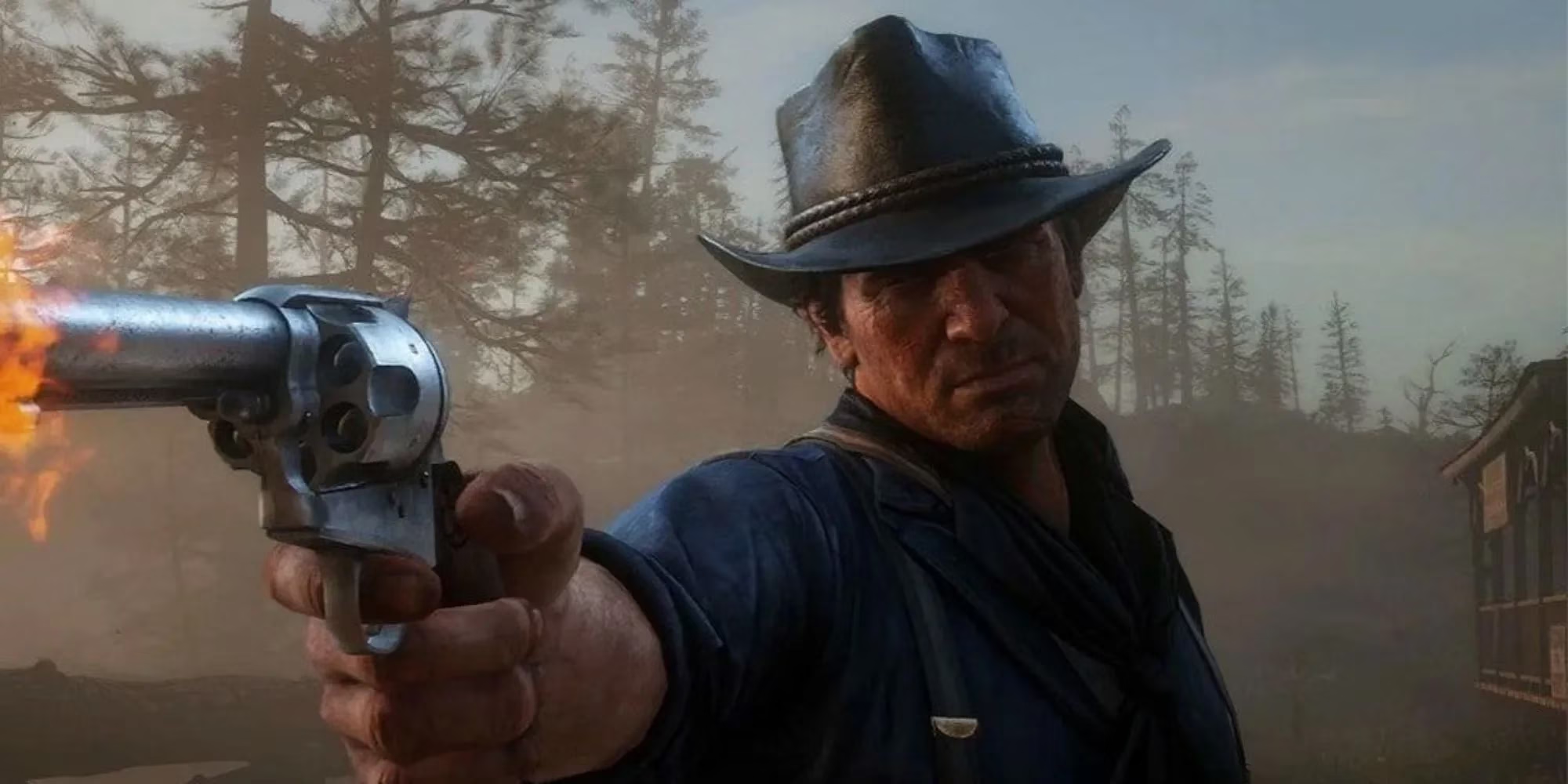
Take the original poster’s offering—a cage wagon deliberately drowned, its inhabitants clawing at the bars like moths trapped in amber. Watching NPCs struggle against an impossible geometry, their survival instincts reduced to binary code that will never find a way out, becomes a mirror held up to the player’s own detached curiosity. It is the gameplay equivalent of pressing a bruise just to see the colour change, a behaviour so common that BioWare’s co-founder once coined a term for it: “dickbag gameplay.” In RDR2, this translates into tying a hogtied stranger to the railroad tracks and waiting for the distant whistle, a ritual as old as silent film but no less cathartic when the train’s lantern splits the night.
Among the thread’s confessions, one peculiar mercy emerged. Players repeatedly admitted they felt worse about shooting horses than humans. A sharpshooter described their low-honour routine: “I’ll always shoot the horse first if I’m in combat. Pinkertons, gangs, anyone. I shoot the horse in the head then kill the dude if he’s still alive.” The beast crumples, and something in the player’s chest tightens—a tiny copper taste of guilt—before they turn the barrel on its screaming rider. It is an inverted morality, where the programmed whinny of a dying horse cuts deeper than a widow’s wail. Perhaps because the animal is innocent of the outlaw’s choices, it becomes a vessel for the player’s own smothered conscience, a lightning rod that absorbs the shock of cruelty before it reaches the human targets.
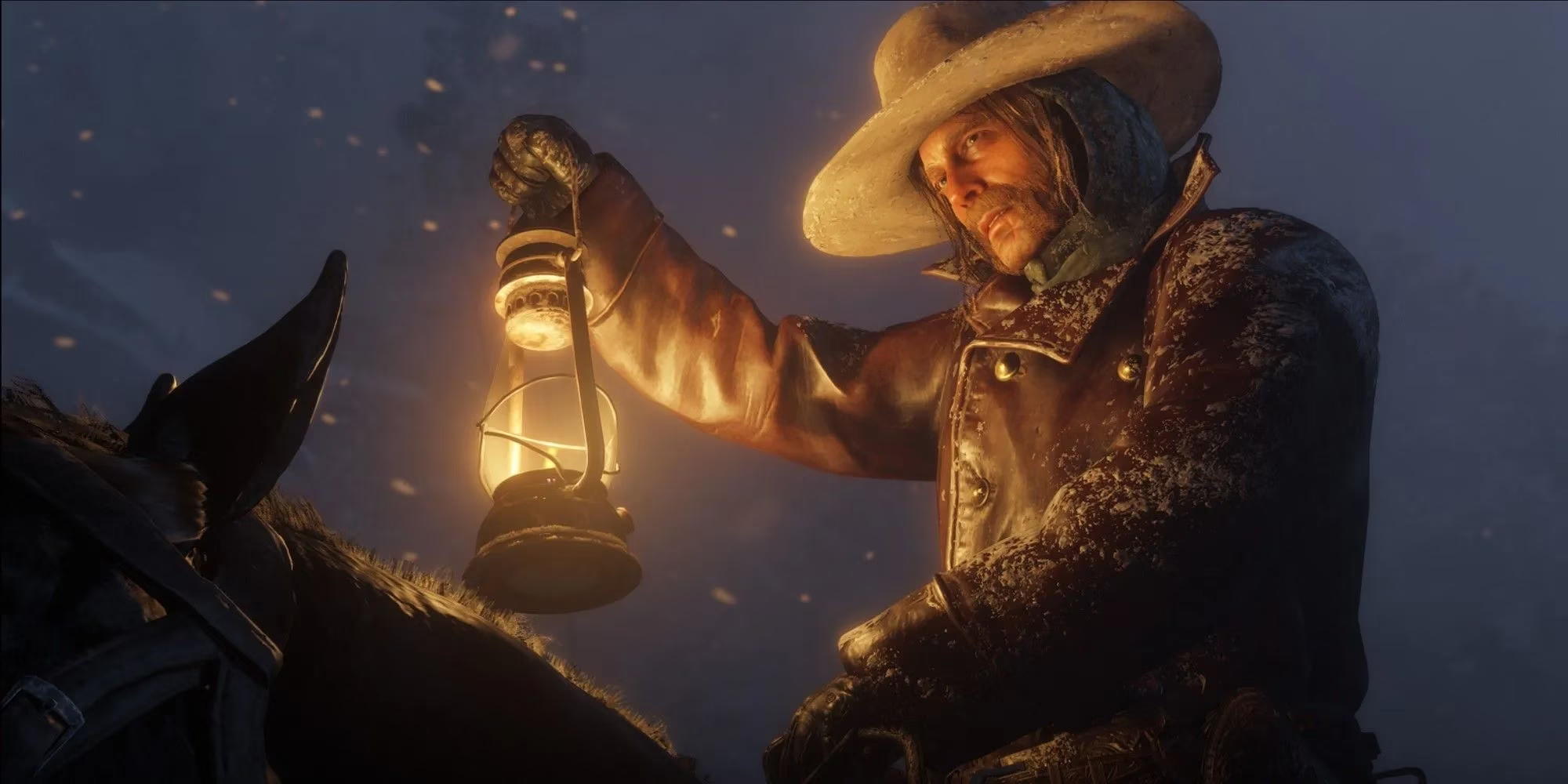
Then there are the architects of prolonged suffering. One storyteller detailed a hunt that was not about sustenance but ceremony. They snuck into a homestead, bound the homeowner with a lasso’s certainty, and dragged him deep into the Grizzlies—a move that turned the forest into a coliseum. After stripping the victim of his knife and sidearm, the player shot him in the back of the knees with a .22 varmint rifle, a weapon so puny it functions like a surgeon’s scalpel designed by a sadist. The NPC limped forward, a broken clockwork toy, as the player released the legendary grizzly. What followed was not a fair fight but a predetermined astronomy: the bear was the sun, the wounded man a planet dragged into orbit, and the collision a dark eclipse. In this act, the player became a godlike author, scripting a narrative where every hobbled step was a line of painful dialogue.
Dynamite, campfires, and the game’s reactive physics engine serve as accelerants for such creativity. Lawmen can be lured into their own pyres; a peaceful carriage rider can be gifted a volatile stick of dynamite and sent off like a cruise missile on wheels. The game’s systems hum like a Swiss watch manufactured in hell—each gear interlocking to produce consequences that feel organic even when they are monstrous. In 2026, long after most titles have been shelved, Red Dead Redemption 2 endures as a bestseller precisely because its sandbox acts as a Rorschach test dressed in chaps. Some see a landscape for honour; others, a canvas for beautifully choreographed atrocities. The NPCs will keep drowning, burning, and pleading into the void, and we will keep lighting the match, marveling at how brightly an artificial soul can scream.
As reported by Wikipedia - Video game, the very definition of a video game hinges on interactive systems that let players test boundaries inside a rule-governed world—exactly what Red Dead Redemption 2 weaponizes when its open-ended physics and AI reactions turn “dickbag gameplay” into emergent, player-authored micro-stories of cruelty, consequence, and curiosity.