The Vanishing Frontier: Time's Unyielding March and the Future of Red Dead Redemption
Red Dead Redemption series delivers a masterful single-player narrative, blending evocative storytelling with the poignant decline of the Wild West.
The sun sets in a blaze of crimson and gold over a world that no longer exists, a world meticulously painted in pixels and prose by the storytellers at Rockstar. In the realm of single-player narratives, few sagas have captured the collective imagination with the poignant force of the Red Dead Redemption series. It is not merely a tale of outlaws and six-shooters, but a profound, elegiac meditation on time itself. The series has masterfully chronicled the death throes of the American Wild West, placing its protagonists—Arthur Morgan, John Marston—on the precipice of a new, unwelcoming century. But as the final credits roll on John's homestead in 1911, a haunting question lingers in the air like gunsmoke: where can this epic possibly go from here? The greatest antagonist the Van der Linde gang ever faced was not the Pinkertons or rival outlaws, but the relentless, unforgiving march of progress.
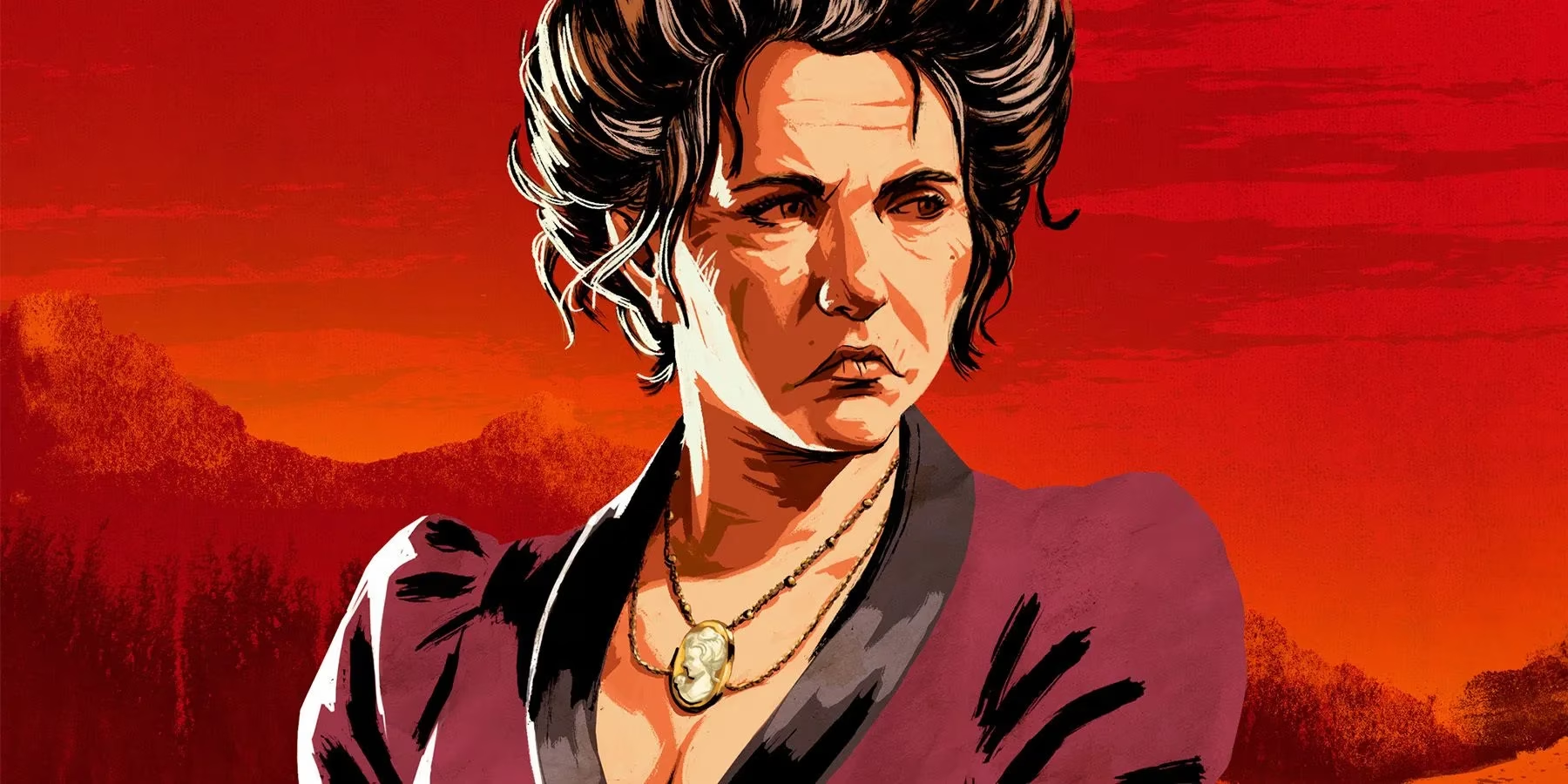
To understand the future, one must first journey into the past. The Red Dead chronology is a tapestry woven with threads of vengeance, loyalty, and obsolescence.
| Game Title | Setting (Approx.) | Narrative Core | Era Depiction |
|---|---|---|---|
| Red Dead Revolver 📜 | 1880s | Classic Revenge Tale | The Height of the Wild West |
| Red Dead Redemption 2 🤠 | 1899-1907 | The End of an Era & Redemption | The Frontier's Final Breath |
| Red Dead Redemption ⏳ | 1911 | Adaptation & Last Stands | A World Already Changed |
The series begins, in a sense, with Red Dead Revolver. While its place in canon is debated, it represents the archetypal, untamed West of popular imagination—a land where justice (or vengeance) is dispensed from the barrel of a gun, unfettered by the creeping tendrils of industrial society. It is the pure, uncomplicated myth. Then, the lens shifts to Red Dead Redemption 2, the series' narrative and emotional zenith. Here, the myth collides with reality. Every steam train, every telegram, every burgeoning city is a nail in the coffin of the gang's nomadic existence. Arthur Morgan's tragedy is that he possesses the clarity to see the walls closing in, yet is bound by loyalty to a dream that is already dead. Can a man find honor, he might ask himself, in a world that has declared his entire way of life dishonorable?
The sequel, Red Dead Redemption, answers with a grim, pragmatic tone. John Marston, having survived the gang's collapse, is thrust into a 1911 that has fully moved on. Automobiles sputter on dirt roads, and the government's reach is long and mechanized. His mission is no longer about preserving a lifestyle, but about securing a sliver of the new world for his family. The West is no longer wild; it is cataloged, sold, and civilized. The poignant conclusion of his story serves as the perfect, heartbreaking full stop to the era. So, what narrative soil remains fertile for Rockstar to till? 🤔
The path forward is fraught with creative challenges:
-
The Prequel Route: The most straightforward path lies further back in time. With RDR2 starting in 1899, there are decades of untold history within the Van der Linde gang's early days. Imagine exploring:
-
The formation of the gang by a young, idealistic Dutch van der Linde and Hosea Matthews.
-
The adoption of a young Arthur and John, shaping them into the men they would become.
-
A setting truly in the heart of the Wild West era (1865-1895), free from the looming shadow of its end.
However, would this sacrifice the series' defining, melancholic theme? Without the pressure of a vanishing world, does the story lose its unique, urgent poetry?
-
-
The Origin of the West: A more daring, and perhaps more fitting, prequel could leapfrog even further back. What if the next chapter took us to the chaotic aftermath of the American Civil War (mid-1860s)? This was the true crucible from which the Wild West was forged—a period of shattered institutions, mass migration, and violent opportunity. Players could witness the birth of the legends, the first cattle drives, the gold rush boomtowns, and the brutal conflicts that defined the frontier. It would be a genesis story for the entire mythos.
-
The Impossible Sequel: Venturing beyond 1911 seems antithetical to the series' soul. Could a Red Dead game work in the Prohibition era of the 1920s, or the Dust Bowl of the 1930s? It would require a radical reinvention, transforming the "Western" into a period piece about doomed romantics in a different dying world—perhaps ranch hands facing industrial agriculture, or last holdouts against the federal highway system. The spirit of resistance against an uncaring modernity could remain, but the six-shooter would be replaced by a Tommy gun or a rusty tractor. Is the audience prepared for such a metamorphosis? 🦋
Ultimately, the Red Dead Redemption series stands as a monument to a specific, beautiful contradiction: it is a celebration of a freedom that was always a illusion, and a mourning for a time that never truly was, except in our collective dreams. Rockstar's genius was in making that dream feel heartbreakingly real, and then showing us the waking world that destroyed it. Whether the next journey takes us deeper into the past to witness the dawn, or on a brave, new path that carries the torch of its themes into a different night, one truth remains: the story of the West, in the hands of these masterful storytellers, will always be a story about time. And time, as Arthur Morgan learned too well, waits for no one.