The Van der Linde Gang's Code and Its Tragic Collapse in Red Dead Redemption 2
Red Dead Redemption 2 and the Van der Linde gang evoke a tragic, nuanced legacy in Rockstar Games’ acclaimed Western epic.
In the sprawling, unforgiving world of Red Dead Redemption 2, the Van der Linde gang is more than a band of outlaws—it is a fading family bound by a shared creed. Rockstar Games’ 2018 masterpiece, still widely played and dissected in 2026, paints a nuanced portrait of a criminal fraternity that clings to ideals even as the frontier closes around them. At the heart of the narrative is not just a series of heists and shootouts, but a slow, heartbreaking erosion of the principles that once made this gang feel like a force of chaotic good in a lawless land. For players still revisiting the game on modern hardware, the memory of Dutch’s crumbling utopia remains as potent as ever.
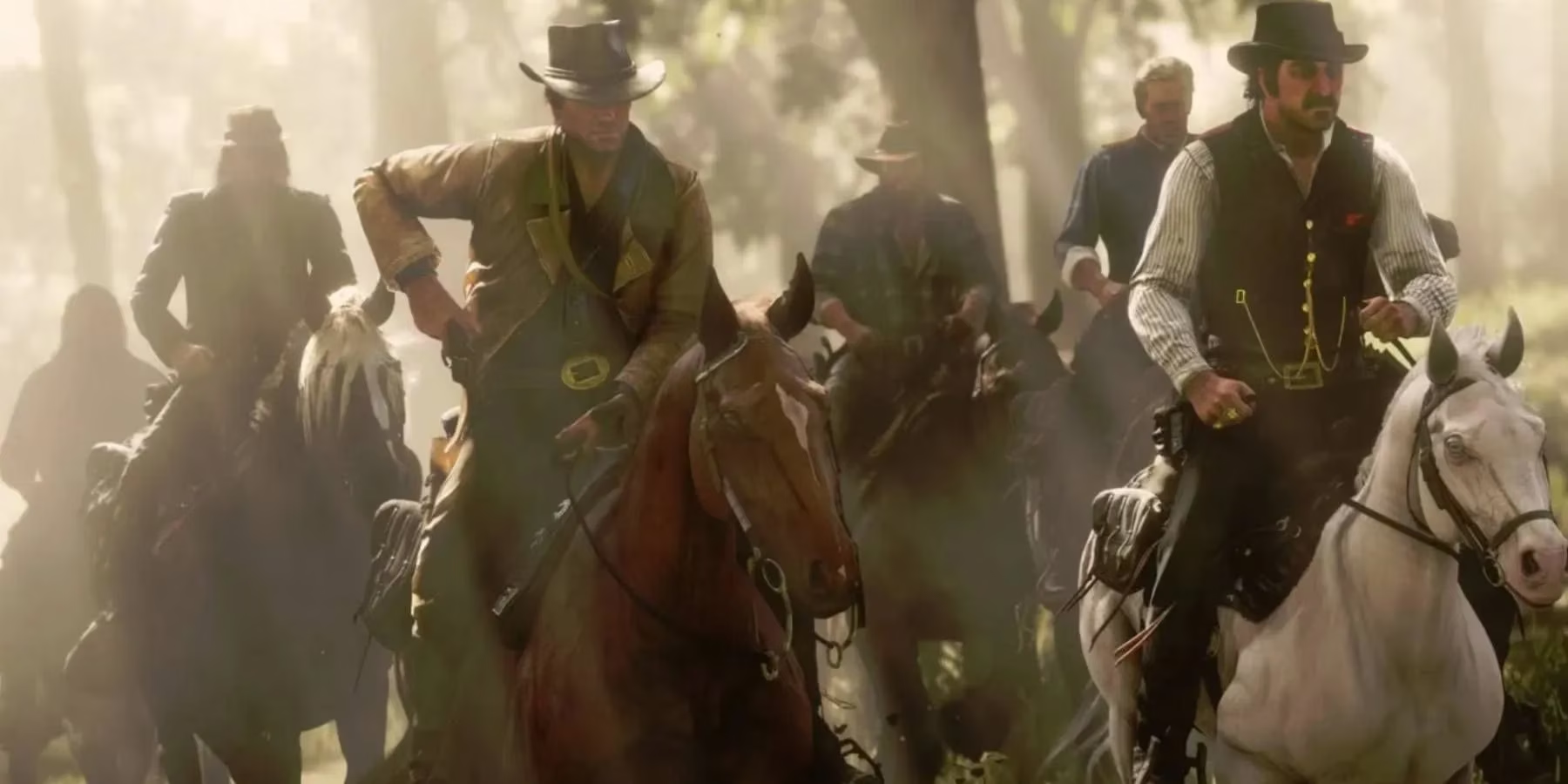
A Code Born of Necessity and Honor
Founded by the charismatic Dutch Van Der Linde and his pragmatic partner Hosea Matthews, the gang started as a tiny duo of con artists and dreamers. It was not until they took in a teenage orphan named Arthur Morgan that the group truly began to evolve into something resembling a surrogate family. Over the years, Dutch would welcome into the fold a motley crew of misfits: widows, former slaves, swindlers, and warriors—all united by a shared distrust of civilization and a longing for freedom. What set the Van der Lindes apart from the ruthless gangs that roamed the West, however, was their self-imposed moral framework.
The gang operated on a clear set of guidelines that, in their eyes, separated them from common criminals. First and foremost, they targeted the wealthy, never the poor. This was as much a matter of practicality—the rich had deeper pockets—as it was a point of pride. Most of the gang’s members had tasted poverty, hunger, and exploitation, and they refused to inflict those wounds on others. “We shoot fellers as need shooting, save fellers as need saving, and feed ’em as need feeding,” Dutch famously declared, and for years the creed held. Women and children were off-limits entirely; harming them was unthinkable and would earn the perpetrator a swift rebuke—or worse.
Violence, while an inescapable tool of their trade, was applied with a surgeon’s precision. The gang’s preferred weapon was intimidation. A well-timed flourish of a revolver could empty a stagecoach of its valuables without a drop of blood spilled. Drawing first was discouraged, especially against civilians. Yet when cornered by lawmen or rival outlaws, the Van der Lindes transformed. Gunslingers like Arthur Morgan and John Marston became engines of destruction, proving that restraint was a choice, not a weakness. This delicate balance—mercy for the innocent, ruin for the wicked—defined the gang’s identity and earned them a strange, grudging respect in some quarters.
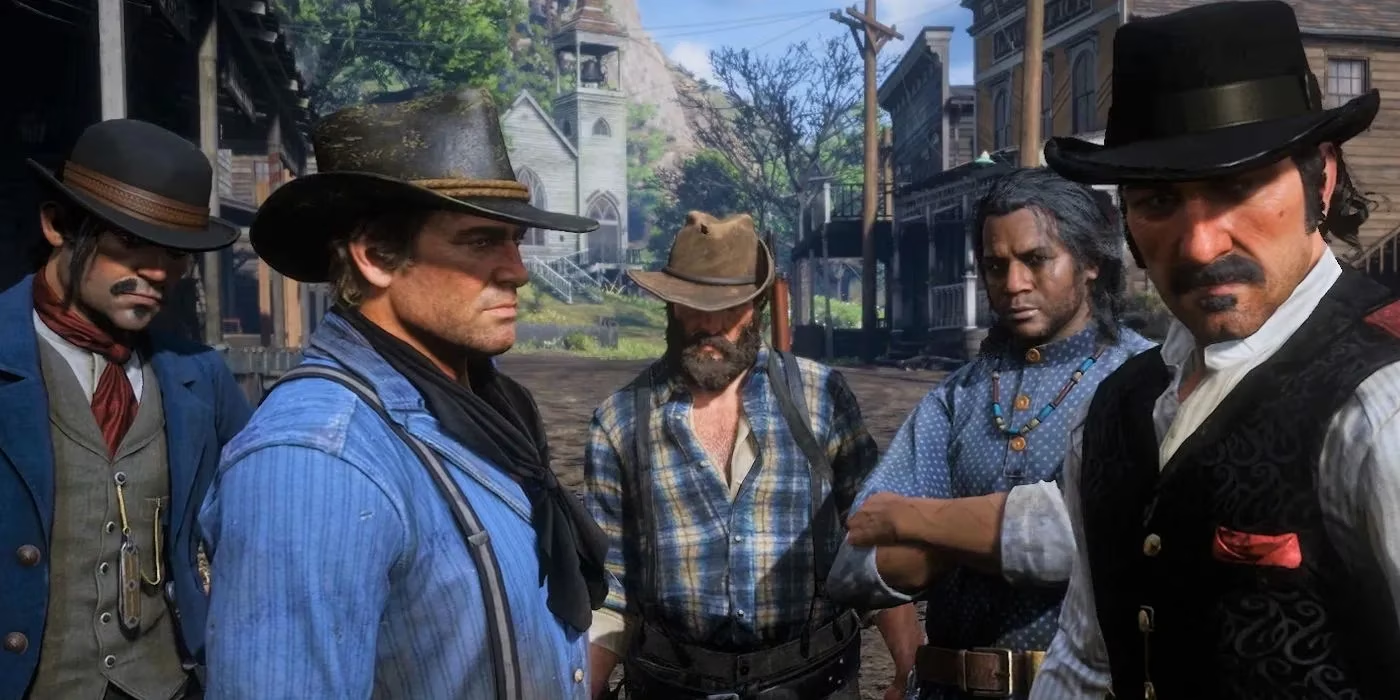
Arthur Morgan: The Embodiment of a Dying Ideal
Nobody embodied the Van der Linde code more faithfully than Arthur Morgan, the player’s avatar and an unlikely moral compass. Through countless gameplay moments and story beats, Arthur could be guided to show extraordinary compassion: halting to help a stranded traveler, forgiving a debt, or sparing a foe who begged for life. Even during his most brutal missions, his actions could tilt toward mercy, reinforcing the idea that a man could be both a killer and a knight. Arthur’s personal journey is a mirror held up to the gang’s decaying ethos; the more Dutch and others strayed, the harder Arthur clung to his own sense of right and wrong. This tension became the emotional backbone of Red Dead Redemption 2, and in 2026, retrospectives still praise Rockstar for crafting a protagonist whose honor bar felt organic rather than a mere game mechanic.
The Unraveling: Cracks in the Foundation
Tragically, the code was already fraying by the time players joined the story in 1899. The seeds of destruction had been sown, and two figures personified the corruption. Micah Bell, a late addition to the gang, was the antithesis of everything Arthur and Hosea stood for. He killed indiscriminately, baited conflict, and openly mocked notions of honor. Dutch, increasingly paranoid and erratic, shielded Micah from consequences, valuing his ruthless efficiency over the gang’s traditional values. The result was a moral infection that spread through the camp.
Equally damaging was the quiet, insidious work of Leopold Strauss, the gang’s loan shark. His usury specifically preyed on the poor—the very people Dutch claimed to protect. Arthur’s visible disgust when collecting debts from desperate souls like Thomas Downes underscored the hypocrisy gnawing at the gang’s core. That mission, which results in Arthur’s fatal tuberculosis, is a masterstroke of poetic justice: the code’s betrayal literally poisons the man who most believed in it.
As disillusionment grew, bonds snapped. Hosea’s death in Saint Denis robbed the gang of its last voice of reason. Sean, Lenny, and others fell in quick succession. Mother Nature herself seemed to conspire against them, and Dutch’s descent into megalomania accelerated. By the game’s climax, the once-sacred rules had been shattered. Micah orchestrated massacres with Dutch’s passive blessing, and the gang splintered into warring factions. The code had dissolved into a memory.
Legacy and What Could Have Been
Looking back from 2026, the brilliance of Red Dead Redemption 2 lies in how it makes players mourn not just characters but a code of conduct. The Van der Linde gang’s tragedy is that they were never evil in the way the O’Driscolls or the Lemoyne Raiders were; they simply could not outrun the world that was closing in, nor their own hypocrisy. The game invites the tantalizing thought: if Dutch had heeded Hosea, cast out Micah, and stayed true to their principles, could the gang have survived? Perhaps not entirely, but they might have disintegrated with dignity instead of a hail of bullets on a mountainside.
Today, even eight years after its release, Red Dead Redemption 2 continues to generate discussion on forums, in academic papers, and among content creators. Mods that allow players to rebuild the camp and uphold the code in a sandbox mode speak to a collective wish for a different ending. The game remains available on PC, PlayStation 4, and Xbox One, with backward compatibility ensuring smooth performance on PlayStation 5 and Xbox Series X|S. It stands as a reminder that the greatest stories are not about good versus evil, but about the erosion of good under the pressure of a harsh, indifferent world. The Van der Linde code, flawed and doomed, remains one of gaming’s most poignant explorations of morality in a lawless frontier.
Red Dead Redemption 2 has entrenched itself as a classic, and the ghosts of the Van der Linde gang still ride through the minds of players who dared to hope they might, against all odds, find redemption.