The Quiet Heist: How AI Voice Cloning Ravages Performance Identity
AI voice cloning without consent transforms a voice actor’s identity into a phantom limb, eroding their livelihood and artistic integrity.
The recording booth has always been a sanctuary of subtle craft—an arena where a skilled performer pours breath, inflection, and emotional truth into a character, shaping a voice that fans cherish for years. Yet by 2026, that sanctuary feels increasingly porous. Over the last three years, publicly available voice cloning tools have grown so sophisticated that a few seconds of clean audio can generate an uncanny synthetic replica, one that can be made to utter anything its human source never consented to say. To many admirers, this is a playful parlour trick; to the actors behind the voices, it is a violation that hollows out the very core of their livelihood.
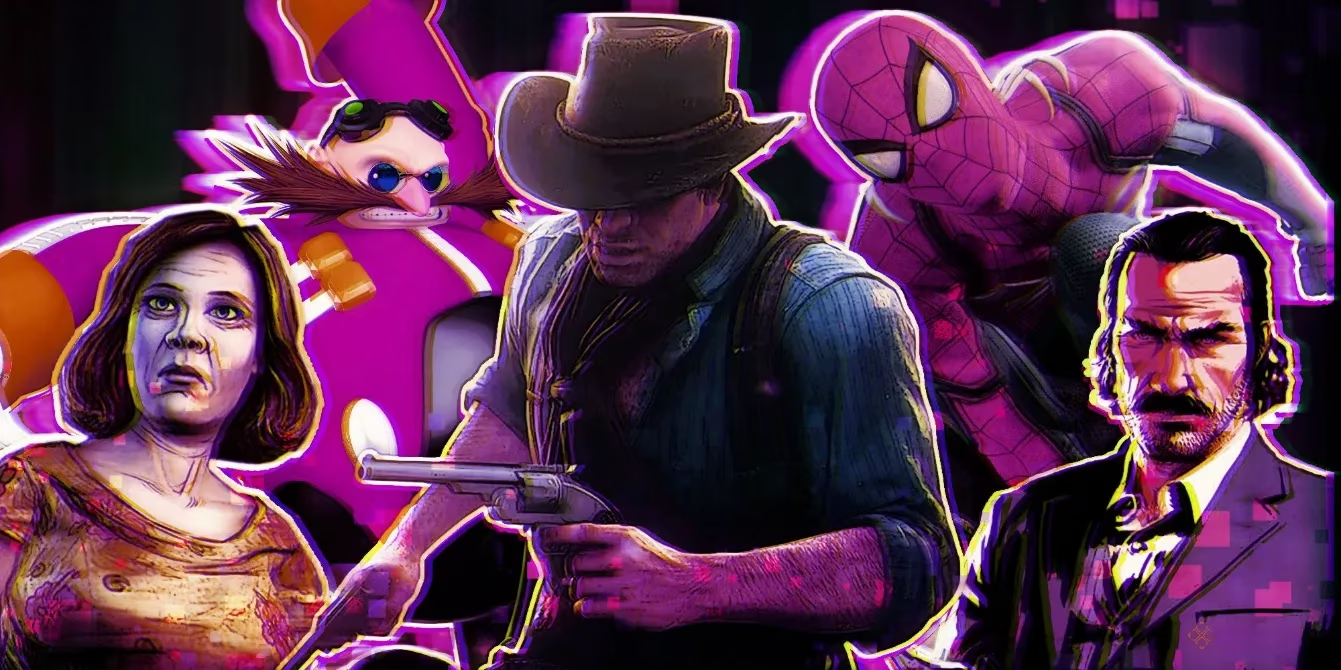
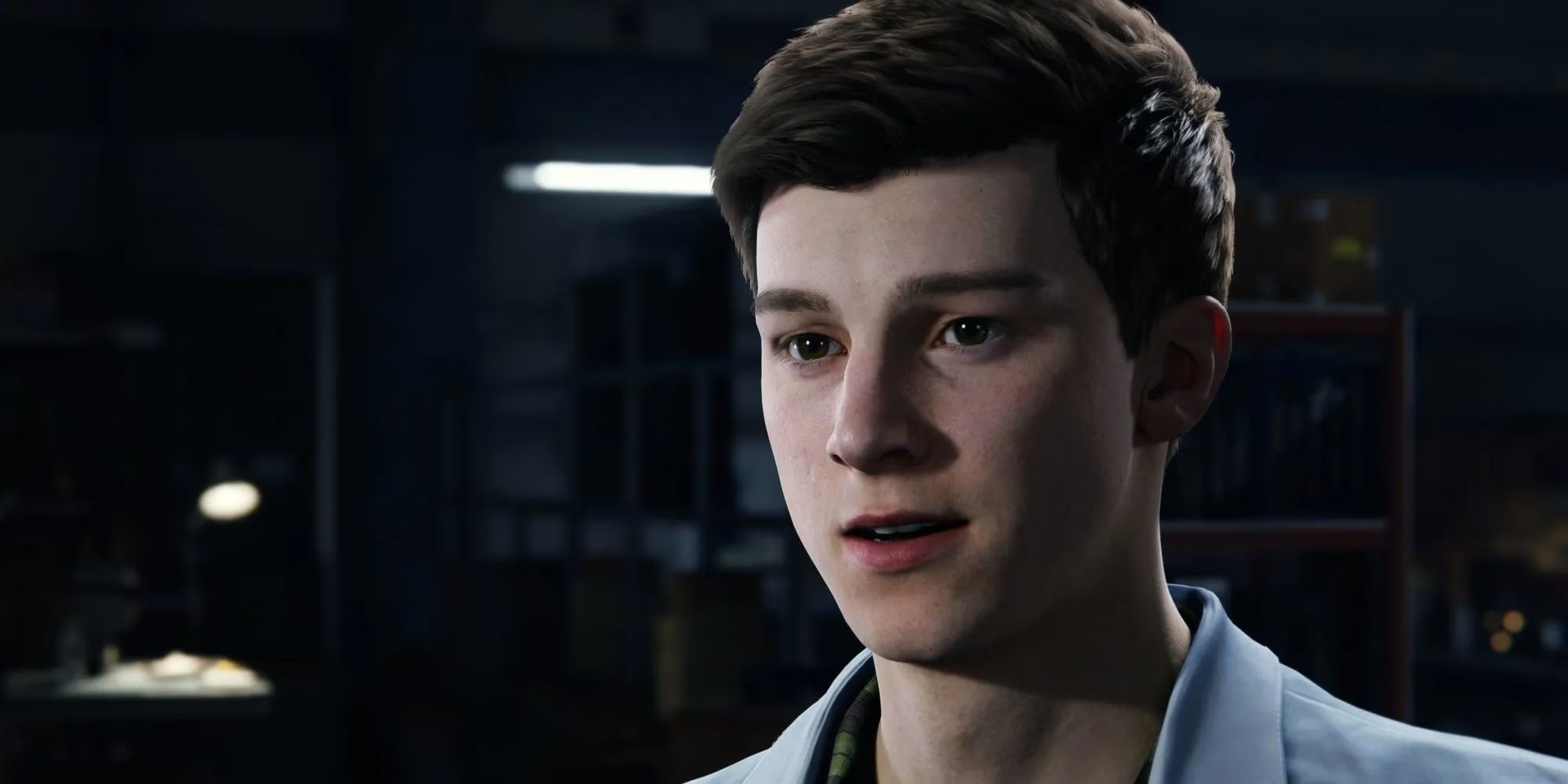
Unlike a painter whose canvas can be photographed without harming the original, a voice actor’s instrument is their identity. The unauthorised replication of that instrument behaves less like imitation and more like a phantom limb being wired to another person’s will—a disembodied remnant compelled to dance to a stranger’s tune. Long-standing performers such as Yuri Lowenthal, famous for Marvel’s Spider-Man and Fire Emblem, describe the practice as appropriation dressed in the costume of fandom. “The big deal is consent,” Lowenthal stressed back when the technology first erupted into public debate. “You’re essentially appropriating someone’s identity and making them do something without their consent, and that’s not okay.” Three years later, that line has become a rallying cry for hundreds of artists facing an avalanche of fan-made clips that range from crude jokes to elaborately staged monologues.
The ethical fault line runs deep because many enthusiasts plead fair use: they earn no money, they say, and only celebrate the performer. Yet the absence of a profit motive does not defuse the damage. Cissy Jones, known for Firewatch and The Owl House, recalled the visceral panic of discovering her voice guiding strangers through TikTok duets she never recorded. “That’s what is so scary,” she explained. “We don’t know if there are any studios who just decide on a whim that they don’t want to pay us to come in for a session, so clone us and plug in the synthetic voice. How would we even know?” The question hangs like a sword of Damocles over an industry that, despite union contracts, has already witnessed studios hoarding motion-capture and facial data for perpetual reuse. Roger Clark, who gave body and soul to Arthur Morgan in Red Dead Redemption 2, warned that automated performance libraries are being built “without the actor’s knowledge,” calling the result “some Frankenstein’d performance” that cheats both artist and audience.
For Mike Pollock, whose portly villain Dr. Eggman has been a fixture of the Sonic the Hedgehog universe for decades, the boundary between fan creation and trespass is brutally personal. He had consistently refused to record a profane internet meme in his official character voice. The advent of AI vaporised that refusal. Enthusiasts fed his voice-print into a program and, as he put it, “extruded a digital sausage of my replicated voice reciting the very words I refused to perform myself.” This act of digital counterfeiting exemplifies a transformation that actors across the board find dehumanising: their vocal signature is treated not as an extension of the self, but as raw material to be ground up and re-formed, a seed harvested by a machine that ignores the tree it came from.
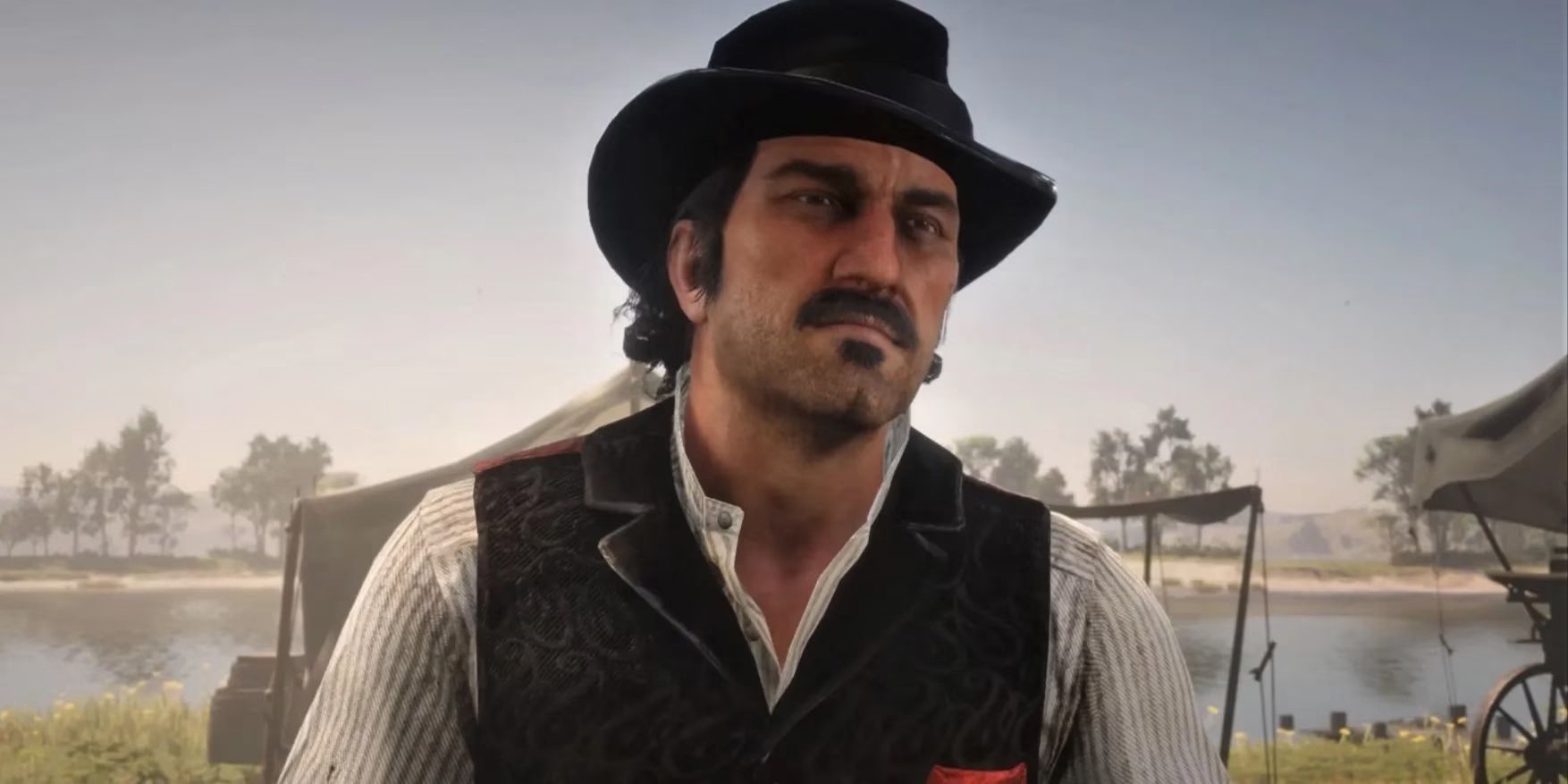
The performers who spoke out during the initial wave of alarm are by no means Luddites. They recognise that artificial intelligence, wielded with consent and proper boundaries, could assist ADR sessions, localisation, or accessibility features. What they reject is the legal vacuum in which their likenesses are mined. Benjamin Byron Davis, known for his magnetic portrayal of Dutch van der Linde, frames the conflict in stark terms: “If AI is used to replicate the work or likeness of an actor without their permission, involvement or remuneration that is beyond a threat to the work we do – that is bald-faced theft.” His concern extends to the intangible profits generated by AI platforms themselves. The fan who makes a meme may not pocket a cent, but the company providing the voice-cloning tool certainly does, and none of that revenue circles back to the person whose voice fuels the product.
The conversations that actors hoped to have with publishers and AI developers have largely stalled. SAG-AFTRA’s strike actions, initially concentrated on television and film, forced a partial reckoning in games as well, yet the AMPTP’s reluctance to agree to sensible guardrails has left performers in a limbo where their voices risk being siphoned into the next budget-friendly production. Lowenthal’s observation that “it already has” referred to studios stealing voices—an event that has since become documented, most notoriously with small developers replacing pickup sessions with synthetic lines generated from prior recordings. Non-union actors, who power a significant portion of anime dubbing and indie titles, remain especially exposed. Jones continues to urge every eligible performer to join a union precisely because of the legal muscle SAG-AFTRA can deploy when contractual violations surface. Still, a union contract is a shield, not a force field, and its reach into the fan modding sphere is nil.
The growing tension places consumers in a paradoxical position. Many gamers profess deep admiration for the actors who bring their favourite characters to life, yet they casually deploy AI replicas as if they were swapping character skins. When Erica Lindbeck, the voice of Futaba Sakura in Persona 5, publicly requested that fans stop circulating AI-generated renditions of her performances, the response was a digital tug-of-war: her plea went viral, but the offending videos proliferated faster than takedown mechanisms could function. The episode illustrates that enthusiasm, when stripped of empathy, becomes a kind of affectionate flaying—the joy of making a beloved figure say something novel overwhelms any consideration of the real person who bleeds into the work.
The path forward demands that audiences recalibrate their understanding of what it means to honour a performance. An actor’s voice is not a publicly owned resource, like a landscape to be photographed, but a living craft shaped by years of training, vulnerability, and collaboration. If the industry is allowed to pursue the cheapest possible substitute, the rich tapestry of distinct vocal performances could be supplanted by a bland chorus of algorithmically smoothed tones. The performers who have spoken out—Lowenthal, Clark, Jones, Pollock, Davis, and many more—insist that respect must start with a simple premise: no voice should be forced to say what its owner has not chosen to say. In 2026, with AI tools more accessible than ever, that premise is not just a professional concern but a litmus test of our collective integrity.