Red Dead Redemption 3: The Future of the Honor System in a Modernizing West
Red Dead Redemption 2 and its evolving honor system captivate fans, fueling excitement for a groundbreaking sequel in Rockstar's legendary series.
The dusty trails and lawless frontiers of the American West, as masterfully crafted by Rockstar Games, have left an indelible mark on the gaming landscape. As we look ahead from 2026, the legacy of Red Dead Redemption 2—a title that shattered sales records and redefined narrative depth in open-world games—looms large over the potential for a third installment. The question isn't just if a new chapter will be written, but how the soul of the series, its iconic honor system, will evolve in a world where the sun has long set on the Wild West. The timeline, after all, has reached a precarious 1911, leaving fans and theorists alike pondering: where can the story possibly go from here?
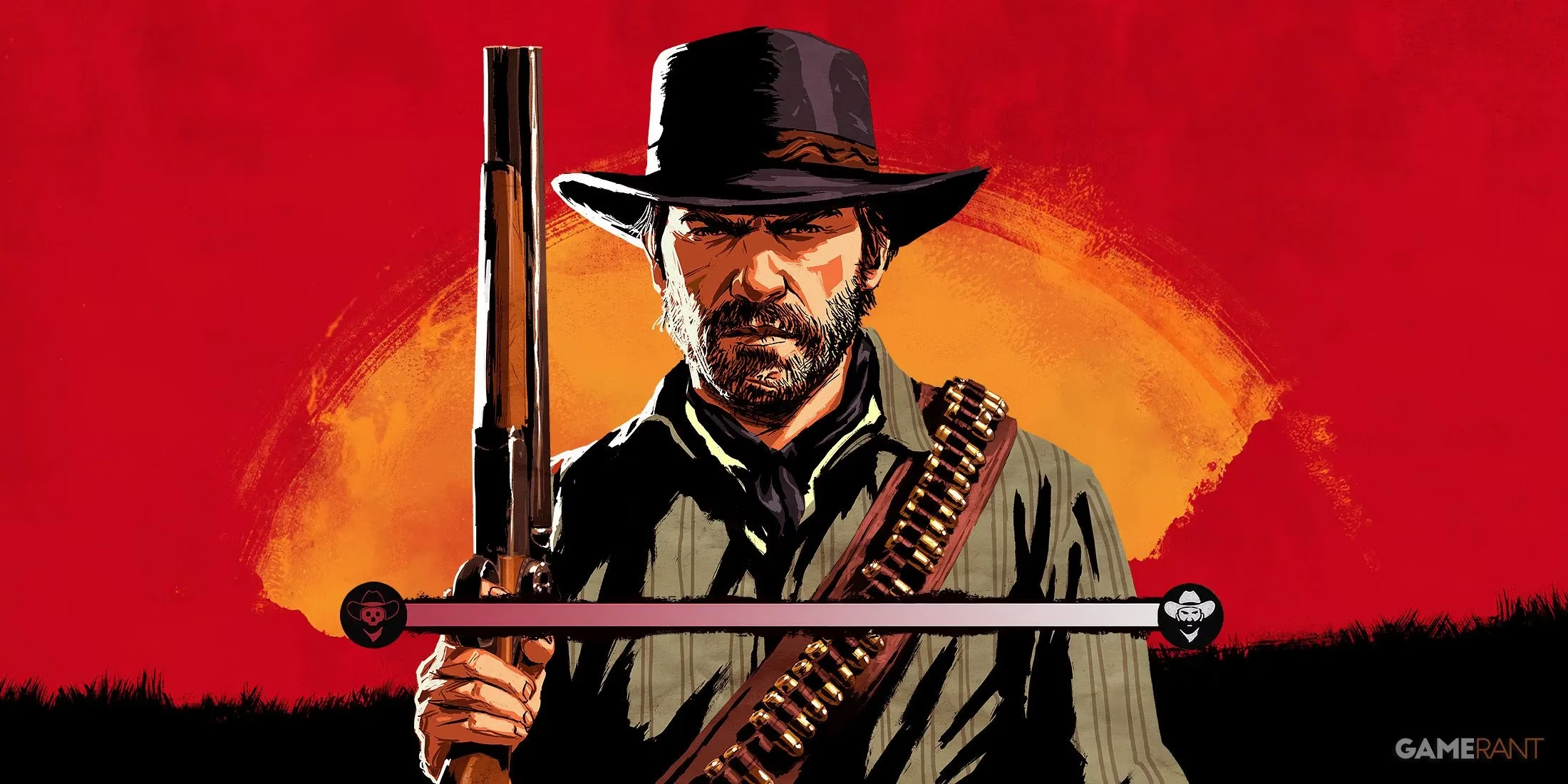
The End of an Era and the Fate of Jack Marston
The central theme of the Red Dead saga has always been the Death of the Wild West. The Van der Linde gang's tragic story was a poignant elegy for a fading way of life. The final canonical image we have is of a grown Jack Marston in 1911, standing at a literal and metaphorical crossroads after avenging his father. This moment is the perfect, yet perilous, jumping-off point for a sequel. Would Rockstar dare to follow Jack into the 20th century? And if so, what becomes of the moral compass that guided Arthur and John? The honor system, so intrinsically tied to the codes (however flawed) of the frontier, faces an existential crisis in a rapidly modernizing America. Can honor exist in a world of automobiles and telephones, or does it simply morph into something new?
A System in Need of an Overhaul
The current honor system is a masterpiece of environmental storytelling, reacting to a player's actions in a world defined by its isolation and nascent law. But place it in 1911 or beyond, and its mechanics suddenly feel anachronistic. Holding up a train in 1899 was an act of brazen outlawry; in 1911, it's a federal crime with a very different kind of response. The system would need a dramatic overhaul to reflect a society with more established institutions, faster communication, and a shifting public perception of justice. Would helping a stranded motorist earn the same kind of goodwill as helping a stranded cowboy? Probably not. The very definition of "honorable" and "dishonorable" acts would need to be recontextualized for a new age.
Learning from a Cousin: The GTA Influence
Ironically, the blueprint for this evolution might lie within Rockstar's other crown jewel. Remember when the first Red Dead Redemption was cheekily called "GTA with horses"? That comparison might hold the key. A more modern Red Dead game could brilliantly adapt and merge its honor system with concepts from Grand Theft Auto's Wanted and Reputation systems. Imagine a dynamic, dual-layered system:
-
Legal Consequences (The Wanted Layer): This would handle immediate reactions from law enforcement, much like GTA. Crimes would accrue bounties and trigger pursuits by county sheriffs, state police, or even early FBI agents. The speed and severity of the response would be tied to the crime's location and notoriety.
-
Social Consequences (The Honor/Reputation Layer): This is where the Red Dead soul would live on. Your actions would build a lasting public reputation or infamy. This wouldn't just be a "good/bad" meter but a multifaceted profile affecting how the world interacts with you.
A New Reputation for a New Century
How would this play out in practice? Let's envision the possibilities for Jack Marston's potential journey:
| Player Action (in ~1911) | Old West Honor System | Modernized Reputation System |
|---|---|---|
| Rob a Bank | Honor decrease, bounty increase. | High Infamy Gain. Bounty becomes national news, attracts specialized Pinkerton detectives, locks you out of legitimate businesses in major towns. |
| Help a Farmer Fix His Truck | Honor increase, maybe a health cure. | Local Reputation Gain. Earns discounts at that town's store, farmer may vouch for you to local law if you have a minor run-in. |
| Commit a Murder in a City | Lawmen spawn, chase you. | Dynamic Law Escalation. Local police → State troopers → Federal involvement if infamy is high. Witnesses use telephones to report. |
| Live a Quiet Life | Neutral honor, little change. | Reputation Decay. High infamy slowly fades if you lay low, but major crimes leave permanent marks. A clean streak allows for social rehabilitation. |
This system would make choice profoundly impactful. A life of crime wouldn't just mean more lawmen on your tail; it would mean becoming a pariah or a legend, with every shopkeeper wary and every alley holding a potential ambush from bounty hunters seeking your famous head. Conversely, a path of redemption could see a former outlaw slowly welcomed back into the folds of a changing society, perhaps finding work in the burgeoning industries of the era—but always with his past whispering behind him.
The Ultimate Redemption Arc
This proposed evolution of the honor system wouldn't just be a gameplay tweak; it would be the core narrative engine for Red Dead Redemption 3. It would directly mirror Jack's internal struggle. Is he doomed to repeat the sins of his father, becoming an anachronism—a gunslinger in a world of assembly lines? Or can he carve out a new definition of honor for a modern man, finding peace not on a remote ranch, but in a complex, interconnected world? The system would force the player, as Jack, to answer that question with every action. Will you use your skills to run bootleg liquor in the dawning Prohibition era, building a different kind of outlaw empire? Or will you use them to protect a community from new, industrialized threats?
The beauty of this setup is that it stays true to the franchise's heart while allowing it to grow up. The honor system was never just about being good or bad; it was about defining your character's place in a dying world. A new game would task you with defining your character's place in a born world. As we await official word from Rockstar, one thing is certain: the journey of redemption is never simple, and its next chapter, should it come, will require a moral compass recalibrated for the modern age.