Red Dead Redemption 2: Comparing First-Person vs Third-Person Gameplay Perspectives
Imagine stepping into the worn leather boots of Arthur Morgan, gazing across the vast American frontier with your own eyes rather than watching from behind. This is the fundamental choice that Red Dead Redemption 2 presents to players in 2025 - should they experience this Western epic through first-person immersion or traditional third-person cinematography? Since its groundbreaking release in 2018, Rockstar Games' masterpiece continues to spark passionate debates about which perspective truly delivers the definitive Red Dead experience.
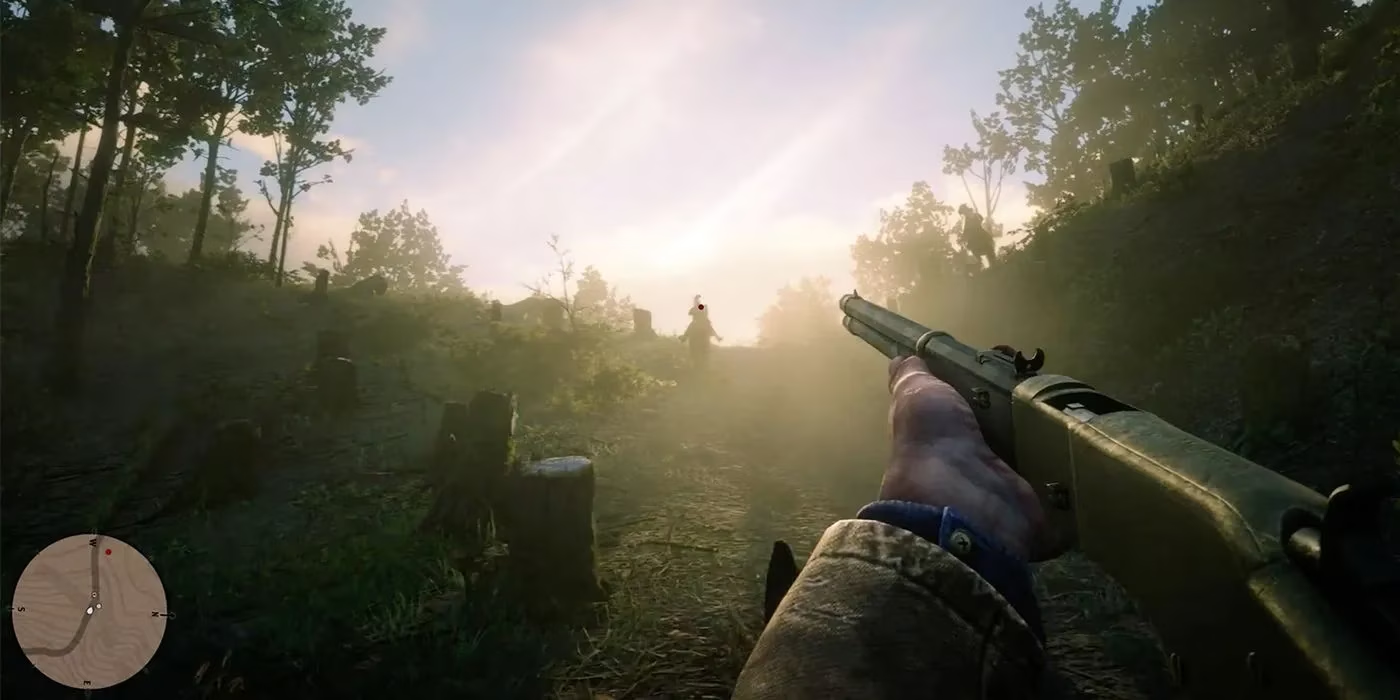
How First-Person Mode Transforms the RDR2 Experience
Have you ever wondered what it truly feels like to walk through the muddy streets of Valentine or stare down the barrel of a Schofield revolver? The toggleable perspective change mechanic allows players to switch between viewpoints with simple controls:
-
PlayStation: Touch Pad
-
Xbox: View Button
-
PC: V key
But why would players choose first-person when third-person has been Rockstar's traditional approach? The answer lies in immersion. When facing everything head-on, the game becomes significantly more intense - every gunfight feels more personal, every conversation more intimate. However, this heightened realism comes with challenges. The cinematic camera option, while excellent for capturing stunning screenshots, can be tricky to maneuver during intense gameplay moments.
What many players discover is that first-person mode isn't simply a camera angle change - it's a completely different way to experience the game's meticulously crafted world. The incredible environmental details that Rockstar poured into buildings, towns, and landscapes become impossible to ignore when you're seeing them through Arthur's eyes.
Third-Person: The Classic Rockstar Experience
Isn't there something comforting about that familiar over-the-shoulder view that has defined Rockstar games for decades? The third-person perspective feels inherently right for a game like Red Dead Redemption 2, allowing players to appreciate the masterpiece of animation that brings Arthur, his horse, and the entire world to life.
Consider these advantages of third-person gameplay:
-
Better situational awareness in combat
-
Full appreciation of character animations
-
Easier navigation through complex environments
-
Traditional Rockstar game feel
Yet, what do players sacrifice for this comfortable perspective? They miss the raw, immediate connection that first-person provides. The trade-off becomes clear: third-person offers tactical advantages and cinematic presentation, while first-person delivers unparalleled immersion.
Which Perspective Reigns Supreme in 2025?
The beauty of Red Dead Redemption 2 lies in its flexibility. Rather than declaring one perspective objectively superior, the game encourages players to experiment based on their preferences and playstyles. But what specific scenarios might influence your choice?
When First-Person Shines:
-
Combat encounters where immersion heightens tension
-
Exploration of detailed interiors and environments
-
Story moments that benefit from personal connection
-
Hunting for increased realism
When Third-Person Excels:
-
Horseback travel across long distances
-
Large-scale combat requiring situational awareness
-
Appreciating character animations and world design
-
New players adjusting to game mechanics
Perhaps the most satisfying approach is dynamic perspective switching. Imagine riding across the heartlands in third-person, then switching to first-person when entering a saloon or engaging in a duel. This hybrid approach allows players to enjoy the best of both worlds, adapting the camera to suit each moment's needs.
The Lasting Impact of Perspective Choice
Seven years after its initial release, Red Dead Redemption 2 continues to demonstrate how camera perspective fundamentally shapes player experience. The game stands as an instrumental piece of video game history precisely because it explores how different "perspectives" - both literal and metaphorical - can change how people approach situations and stories.
What makes this discussion particularly relevant in 2025 is how Red Dead Redemption 2 has influenced subsequent open-world games. Many developers have since incorporated similar perspective-switching mechanics, but few have achieved the same level of polish and intentional design that Rockstar delivered.
Final Verdict: Your Adventure, Your Choice
Ultimately, the question isn't which perspective is objectively better, but which one serves your personal journey through the American frontier. Are you seeking maximum immersion and personal connection? First-person might be your answer. Do you prefer tactical awareness and cinematic presentation? Third-person likely suits you better.
The true genius of Red Dead Redemption 2 lies in its refusal to force a single "correct" way to play. Instead, it empowers players to craft their own experience, whether they're collectors seeking every rare horse, completionists hunting every collectible, or storytellers immersed in Arthur Morgan's emotional journey.
So why limit yourself to just one perspective? The game's seamless switching mechanic invites experimentation. Try both. Discover how being immersed in this fictionalized 1899 Wild West changes based on what you can see - and perhaps more importantly, what you can't. After all, isn't the ability to choose your own viewpoint what makes open-world games so compelling in the first place?