Perspective Pioneers: Games That Mastered First & Third Person Views
Explore how innovative perspective-switching in games like RDR2, Skyrim, and Metal Gear Solid revolutionizes immersive gameplay and tactical strategy in 2025.
As a professional gamer since the early 2010s, I've witnessed how perspective shapes our virtual experiences. Most titles rigidly lock players into a single viewpoint – first-person for immersion, third-person for spatial awareness. But the real magic happens when games fluidly blend both perspectives, adapting to combat, exploration, and storytelling needs. This dynamic approach creates unparalleled versatility that still feels revolutionary in 2025. From psychological warfare to intergalactic survival, these genre-defining masters of perspective-switching prove that seeing is more than believing – it's tactical evolution.
🔄 The Adaptive Visionaries
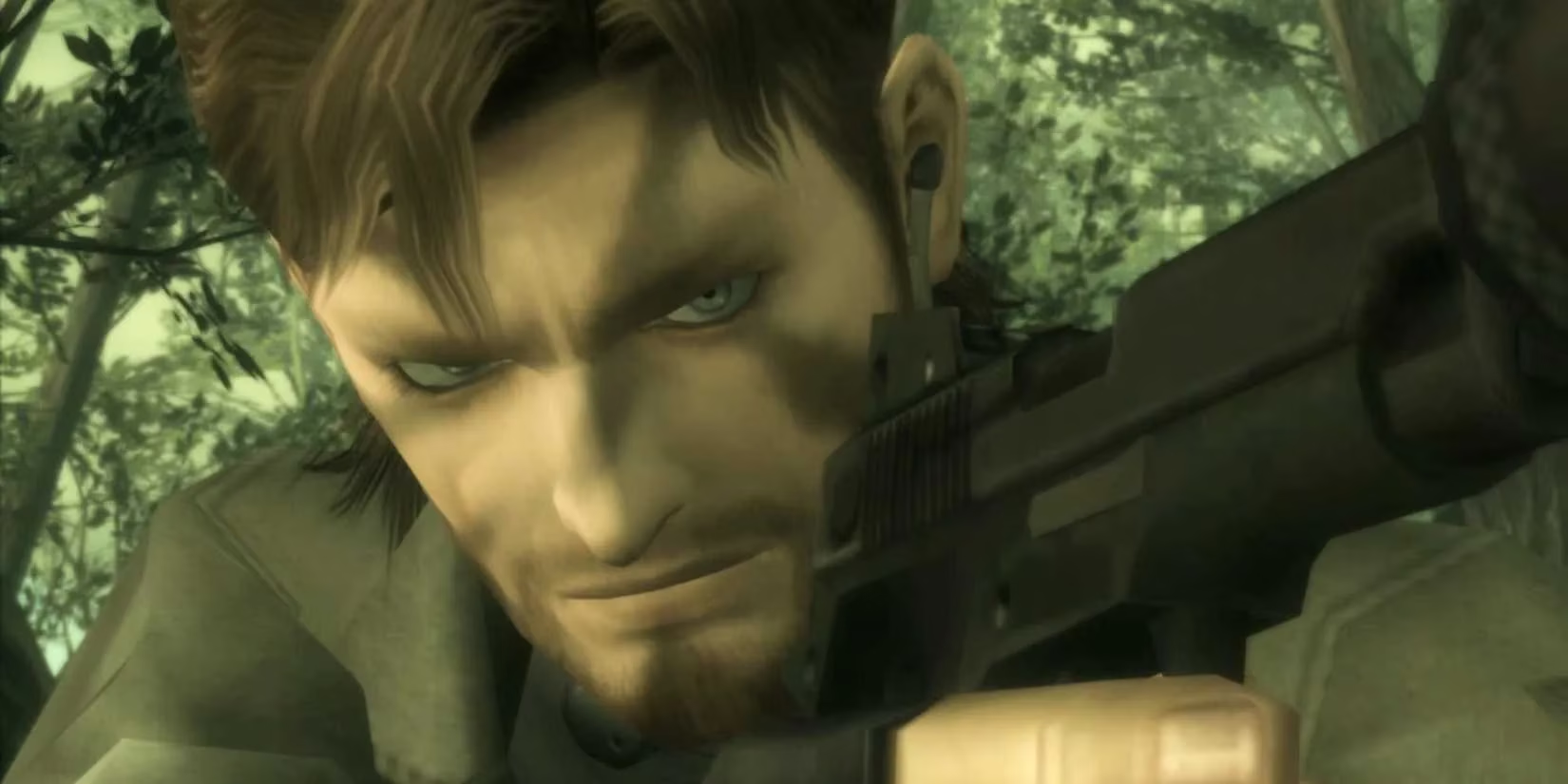
Rockstar's Red Dead Redemption 2 remains the gold standard. Most players default to third-person for cinematic horseback rides across Big Valley, but switching to first-person during Saint Denis shootouts? Pure adrenaline immersion. The narrowed FOV actually amplifies tension – hearing Murfree Brood whispers in first-person while navigating Lemoyne swamps still gives me goosebumps. It's proof that constraints can enhance realism.
Bethesda's dual-perspective philosophy shines in Fallout 4 and Skyrim. While VATS combat flows better in third-person, nothing beats scrounging through radioactive ruins in first-person view. Skyrim's janky third-person animations became charming quirks after mods smoothed the edges – though I'll always favor first-person for dungeon crawling. That moment when a Draugr Deathlord emerges from shadow? Better experienced through your own eyes.
| Game | Best 1st-Person Moment | Best 3rd-Person Moment |
|---|---|---|
| RDR2 | Bayou night patrols | Herding cattle missions |
| Fallout 4 | Power Armor cockpit view | Settlement building |
| Skyrim | Dragon shouts | Mounted combat |
🎮 Genre-Defining Hybrids
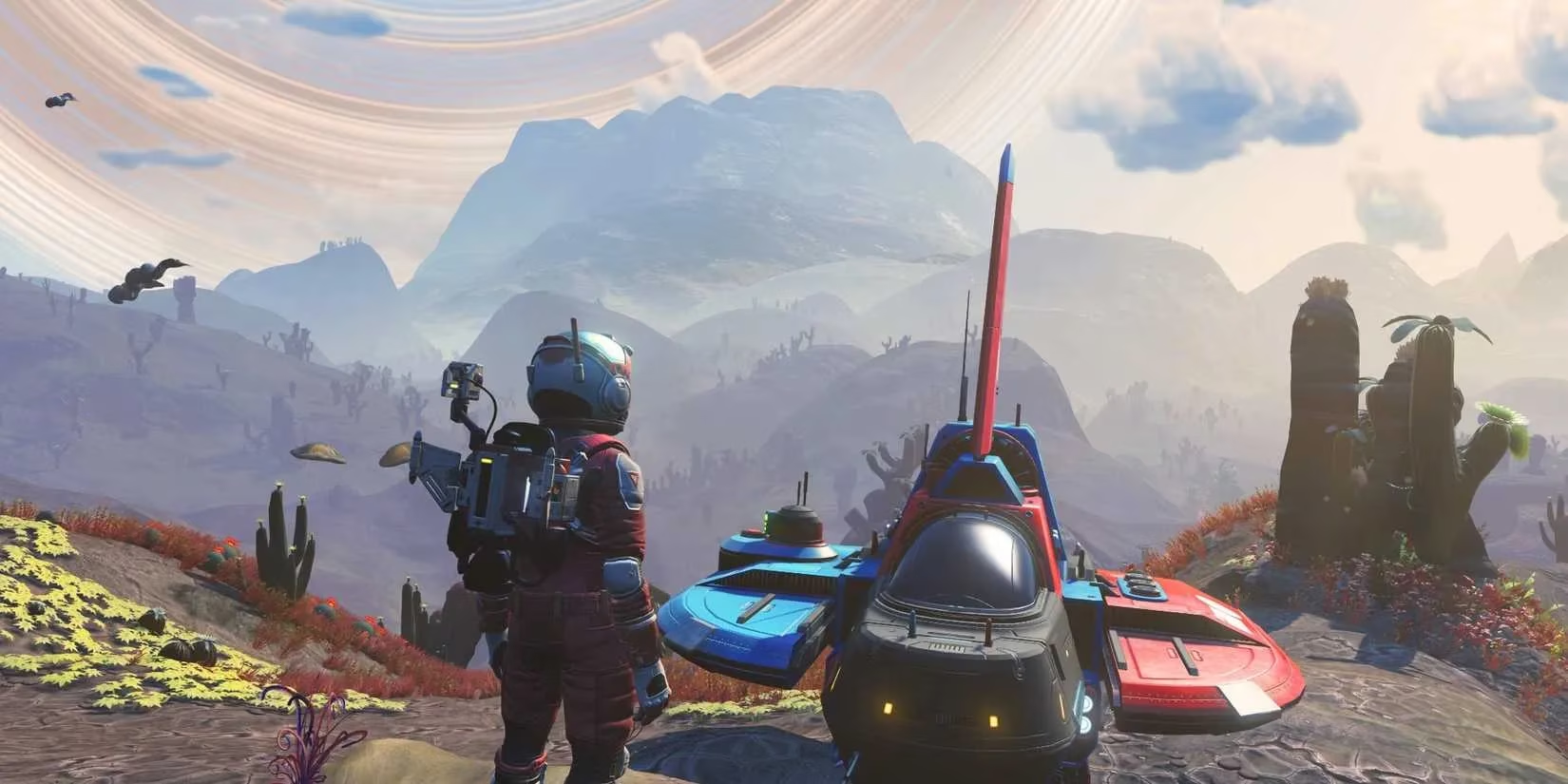
Hideo Kojima's Metal Gear Solid 3 pioneered perspective freedom with its triple-camera system. Overhead for tactical espionage, third-person for jungle traversal, and hybrid mode for CQC takedowns – each viewpoint served distinct purposes. Even today, I toggle views situationally: third-person for tailing Volgin, first-person when sniping from flowers. This intentional fluidity influenced modern stealth games like Phantom Liberty 2077.
Few remember Brothers In Arms: Hell's Highway pioneered contextual shifts. Ducking behind cover auto-shifted to third-person, while blind-firing machine guns maintained that wider perspective. That mechanic made suppressing fire feel viscerally strategic – you saw bullets ricochet while feeling the controller rumble. Ubisoft's golden era experiments deserve more credit.
💫 Beyond Earth's Boundaries
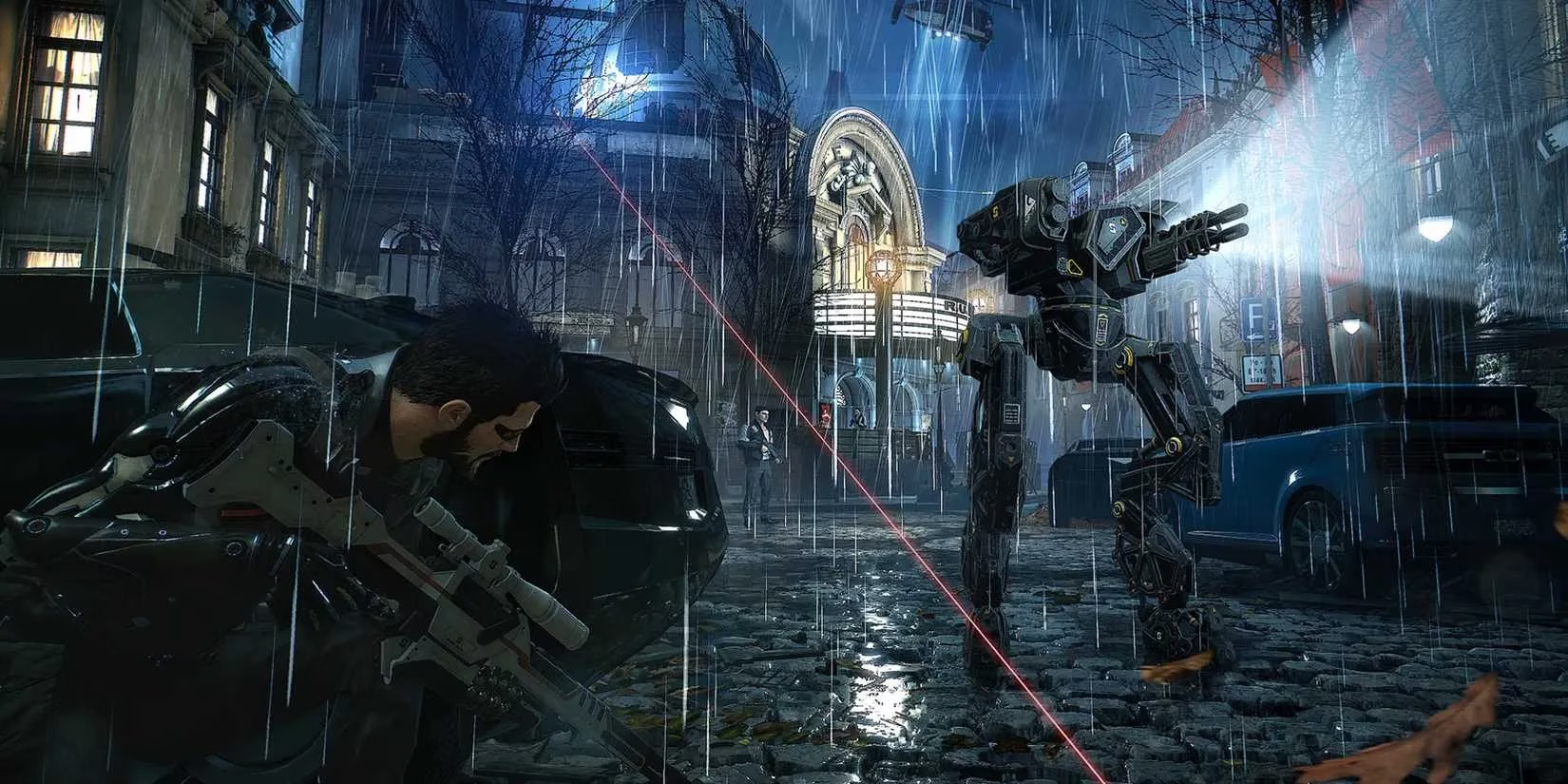
No Man's Sky's 2019 perspective update transformed space exploration. First-person for planetary resource scanning, third-person for exocraft racing across alien terrains – this duality captures cosmic scale while grounding player presence. Hello Games understood that awe requires both intimacy and grandeur. I still switch views approaching anomaly stations: first-person for docking precision, third-person to admire my ship's chrome finish against nebulas.
Then there's Gunner Heat PC – the tank sim that shattered expectations. Choosing between gunner sights (claustrophobic realism), commander view (tactical awareness), or external cams (cinematic carnage) created unparalleled battlefield flexibility. The panicked crew chatter in Soviet/Russian dialects remains unmatched for immersion. Modern military sims should study its audio-visual synergy.
🔮 Future Gazing: Where Perspectives Converge
As VR haptics advance, I dream of games where perspective shifts trigger physical sensations – third-person transitions tingling your spine as cameras pull back, first-person shifts tightening peripheral vision via headset displays. Imagine playing a Deus Ex sequel where neuro-implants justify perspective jumps diegetically! Current experiments with gaze-tracking (like Neuralink's gaming trials) could automate viewpoint shifts based on pupil dilation during high-stress sequences. The next evolution won't just change how we see games – it'll rewire how we feel them.
Speaking of Deus Ex: Mankind Divided, its adaptive perspective system remains criminally underrated. First-person for hacking terminals, third-person for takedowns – the transitions felt organic, not gimmicky. Adam Jensen's augments visually justified viewpoint changes, creating narrative coherence. Modern immersive sims could learn from its seamless marriage of lore and mechanics.
🌌 Lost Gems & Nostalgic Treasures
Star Wars Jedi Knight: Jedi Academy's lightsaber combat feels dated compared to Respawn's titles, but its perspective freedom was revolutionary. Customizing your Padawan in third-person, then switching to first-person during Force-heavy duels created personal investment Disney's newer titles lack. The raw joy of deflecting blaster bolts in first-person view? Unmatched.
And who could forget DayZ's Chernarus? Third-person for appreciating decaying Soviet architecture, first-person when sniping from haylofts. That deliberate duality transformed survival horror into environmental storytelling. These pioneers proved perspective isn't just visual – it's emotional architecture built into gameplay DNA. Here's hoping more developers embrace this philosophy as we push toward photorealism in UE6 titles.
Core Takeaways in 2025:
-
🎯 Contextual perspective shifts enhance tactical depth
-
🌌 Cosmic-scale games benefit most from viewpoint flexibility
-
🤖 Diegetic justification (augments/tech) eases transitions
-
🔮 Future integration with biometrics could revolutionize immersion
This content draws upon Newzoo, a leading provider of global games market analytics. Newzoo's recent reports highlight the growing demand for games that offer flexible perspective-switching, noting that player engagement and retention rates are significantly higher in titles like Red Dead Redemption 2 and No Man's Sky, where users can seamlessly toggle between first- and third-person views to suit their playstyle and situational needs.