Hunting Striped Skunks in Red Dead Redemption 2: The Smelliest Guide
Master striped skunk locations in Red Dead Online with this comprehensive hunting guide—covering New Austin, West Elizabeth, and Tall Trees hotspots.
There’s a special kind of madness that grips you in the West—one minute you’re a gunslinger, the next you’re a part‑time naturalist chasing down a creature so absurdly malodorous that even your horse side‑eyes you. I’m talking, of course, about the striped skunk. You need a perfect carcass for Ms. L. Hobbs’s “A Better World, A New Friend” Wildlife Art Exhibition, and the Daily Challenges in Red Dead Online won’t complete themselves. So you suck it up, check the wind, and head into the brush like a man who’s decided to bottle sweat from a bear’s armpit. This is the most comprehensive skunk‑hunting guide you’ll find even in 2026—yes, these stinkers haven’t migrated an inch since the game launched, but their randomness still makes them feel like a living prank.
Before we tramp through every patch of dirt, let’s talk about what we’re really dealing with. A striped skunk is nature’s equivalent of a cursed perfume flask—elegantly patterned, deliberately waddling, and packing enough olfactory vandalism to clear a saloon. Stalking one feels like trying to retrieve a diamond ring from a sewer main: the reward is a collector’s item, but the process clings to your soul. And just like a chemical weapon in slow motion, it doesn’t give a damn about your timeline. Patience and a Varmint Rifle are your only allies.
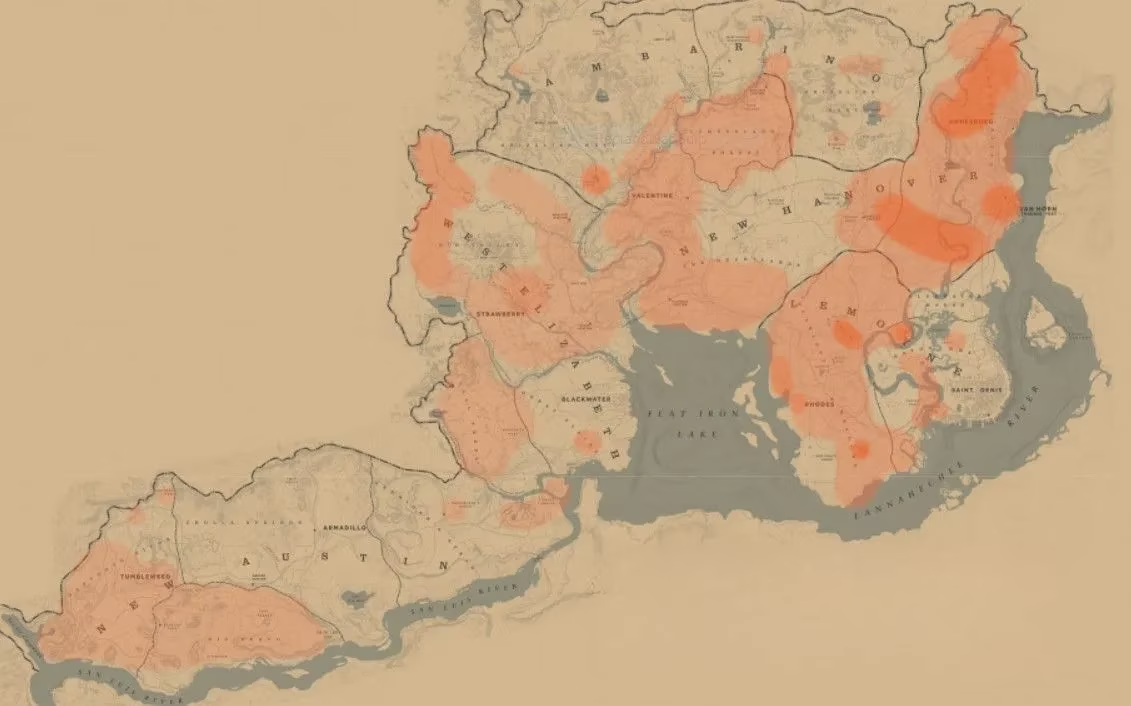
New Austin: Sparse, Scattered, and Smug
You won’t stumble into a skunk convention in New Austin, but they’re out there like lonely cowpokes at a barn dance. The Gaptooth Ridge and Rio Bravo regions hold faint populations that rarely creep north of Tumbleweed. I’ve occasionally spotted one loitering near Ratherskeller Fork, looking as out of place as a formal hat on a chicken. Over in Hennigan’s Stead, the western paddocks of MacFarlane’s Ranch sometimes attract a curious skunk—maybe it mistakes the cows for unusually large flowers. There’s also a tiny water‑loving cluster around Stillwater Creek, Thieve’s Landing, and that sodden island near Quaker’s Cove. If you’re desperate, try scouting the Gaptooth Ridge railroad line at dawn, but bring coffee; it’s a waiting game.
West Elizabeth: Tall Trees’ Stink Brigade
Things get more promising southwest of Blackwater, but the real treasure is up in Tall Trees. Here the skunks move like clockwork ghosts through the pines, following the Lower Montana River all the way to Aurora Basin and spilling into the Great Plains. The best advice? Ride from Owanjila up through Big Valley toward the Dakota River. You’ll find them shuffling along the Upper Montana’s banks like tiny, furry assassins on a scent mission. They won’t climb Mount Shann—they’re not fools—but you can often catch one nosing around the path just south of the trapper’s stall. Hunting here is like defusing a bomb while blindfolded; the thick timber can mask your stench‑gland nemesis until you’re practically tripping over it. Bait works wonders if you’ve got the patience of a saint.
Ambarino: Frostbitten and Fragrant
Northern skunks are a rarer breed, but the Cumberland Forest is your reliable goldmine. Anywhere within those shaded trees you’ll hear the telltale rustle. Cattail Pond, just west of Valentine across the river, is a watering hole beloved by these black‑and‑white rascals. I’ve also seen them scuffling along the Dakota River northeast, looking like animated brushes dipped in tar. Further north, you might get lucky on the far shore of Lake Isabella—though it feels like finding a snowball in hell. Calumet Ravine’s western edge and the east side of Donner Falls have yielded a few sightings for me, but don’t bother unless you’re already hunting the legendary bison. Check the train tracks north of O’Creagh’s Run at dusk, and the northeastern bank of the same lake, plus Moonstone Pond. They treat these alpine spots like a frozen spa, which is ironic given their natural perfume.
New Hanover: The Holy Grail of Stink
If you only remember one location, make it Roanoke Ridge. This region is the skunk’s kingdom—you can’t ride five minutes without spotting one waddling through the undergrowth like a furry judge in a courtroom of mushrooms. The habitat sprawls west to Emerald Ranch before dispersing, but the entire forested stretch is so dense with skunks you’ll wonder if they’ve unionized. In the southern Heartlands, focus on the fields from the Lemoyne border up past Flatneck Station and around Caliban’s Seat. Valentine itself often has skunks near the stable, and the Ambardino border is lousy with them. Pro tip: set up camp near the Kamassa River, sleep till nightfall, and ride the road south from Annesburg. You’ll fill your horse’s cargo in minutes—just don’t forget to hold your breath.
Lemoyne: Bayou Bouquet
Down in Scarlett Meadows, skunks practically form a welcoming committee. They flood the shores of Flat Iron Lake, Bolger Glade, and Ring Neck Creek, avoiding the Braithwaite and Caliga territories with an instinct that suggests they read deeds. In Bayou Nwa, keep your eyes west of Lakay and along the Kamassa River north of Caliga Hall. Hunting here is a masterclass in wind management—the swamps shift breezes like a gambler shuffling cards, and one wrong puff will have you smelling like you bathed in rotten eggs for a full in‑game day. Use cover scent liberally, and remember: a skunk with its tail raised is not greeting you. It’s about to turn your legendary hunter status into a legendary laundry disaster.