How Red Dead Redemption's Darkest Wisdom Still Resonates With Gamers in 2026
Red Dead Redemption 2 quotes showcase Rockstar's storytelling and philosophical depth, impacting gaming in 2026.
It’s been eight years since Red Dead Redemption 2 redefined storytelling in video games, and I still find myself returning to its world—not just for the sprawling open plains or the thrill of a well-timed duel, but for the somber, brutally honest words spoken by its characters. As a regular player in 2026, I’ve watched gaming evolve, yet few titles match the raw, philosophical weight of Rockstar’s Wild West saga. The death of the frontier didn’t just unfold through missions and shootouts; it echoed in the quiet, devastating lines that made me pause and reflect on my own moral compass.
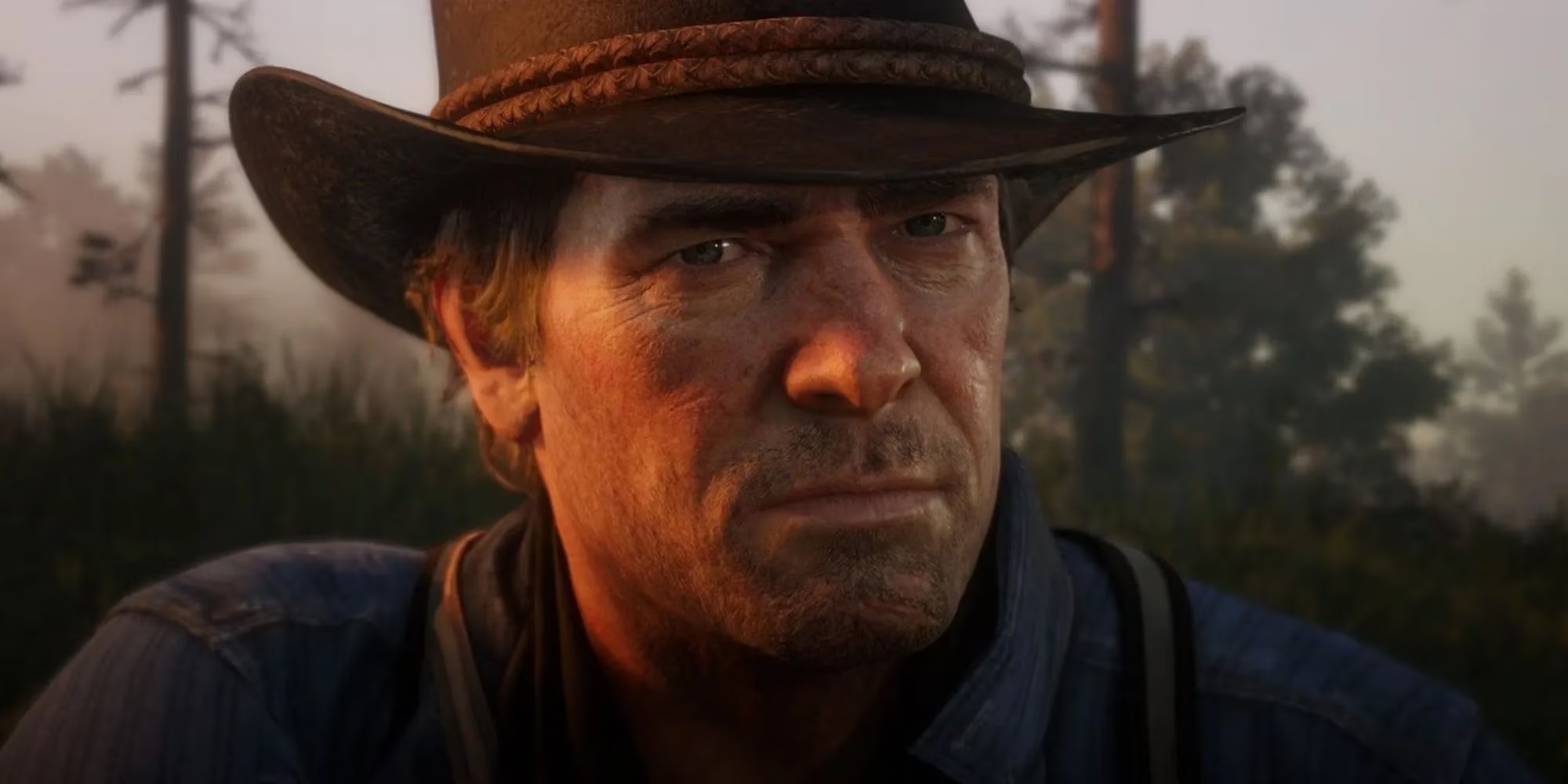
Arthur Morgan’s journey is a masterclass in self-awareness. When he muttered, “We’re bad men, but we ain’t them,” I felt the weight of his internal conflict. He never fooled himself into believing he was a hero. As I guided him through high-honor choices, his wisdom grew sharper: “You don’t get to live a bad life and have good things happen to you.” That line hit me hard even years later—it’s a brutal reminder that redemption isn’t earned through a few good deeds, but through accepting the consequences of a lifetime of violence. I often wondered if my Arthur was truly seeking forgiveness or just trying to leave the world a little less broken before the inevitable end.
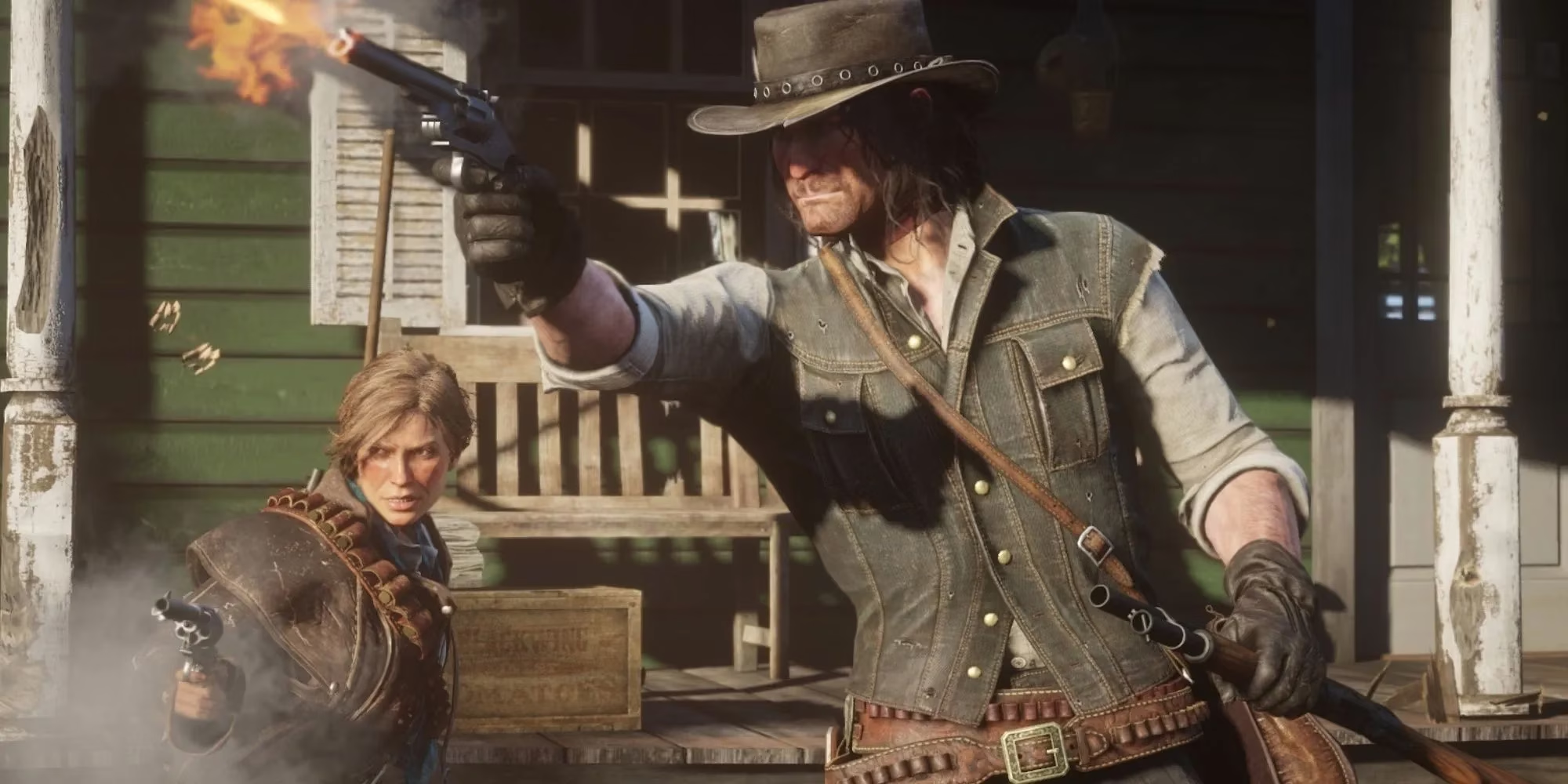
John Marston’s bluntness was equally haunting. When he told Bonnie, “People don’t forget. Nothing gets forgiven,” I saw the legacy of hate passed down through generations, much like his father’s irrational hatred of the English. John understood that the cycle of violence wasn’t just personal—it was woven into the very fabric of the dying West. Even as he fought for a quiet life on Beecher’s Hope, his words to Arthur rang true: “You’re my brother.” Yet he knew brotherhood couldn’t save him. I replayed the epilogue recently, and that darkness still stings: “When a man dies, he dies alone… even if he’s surrounded by friends.” As an outlaw, connection was always an illusion, a truth that made his final stand unbearably tragic.
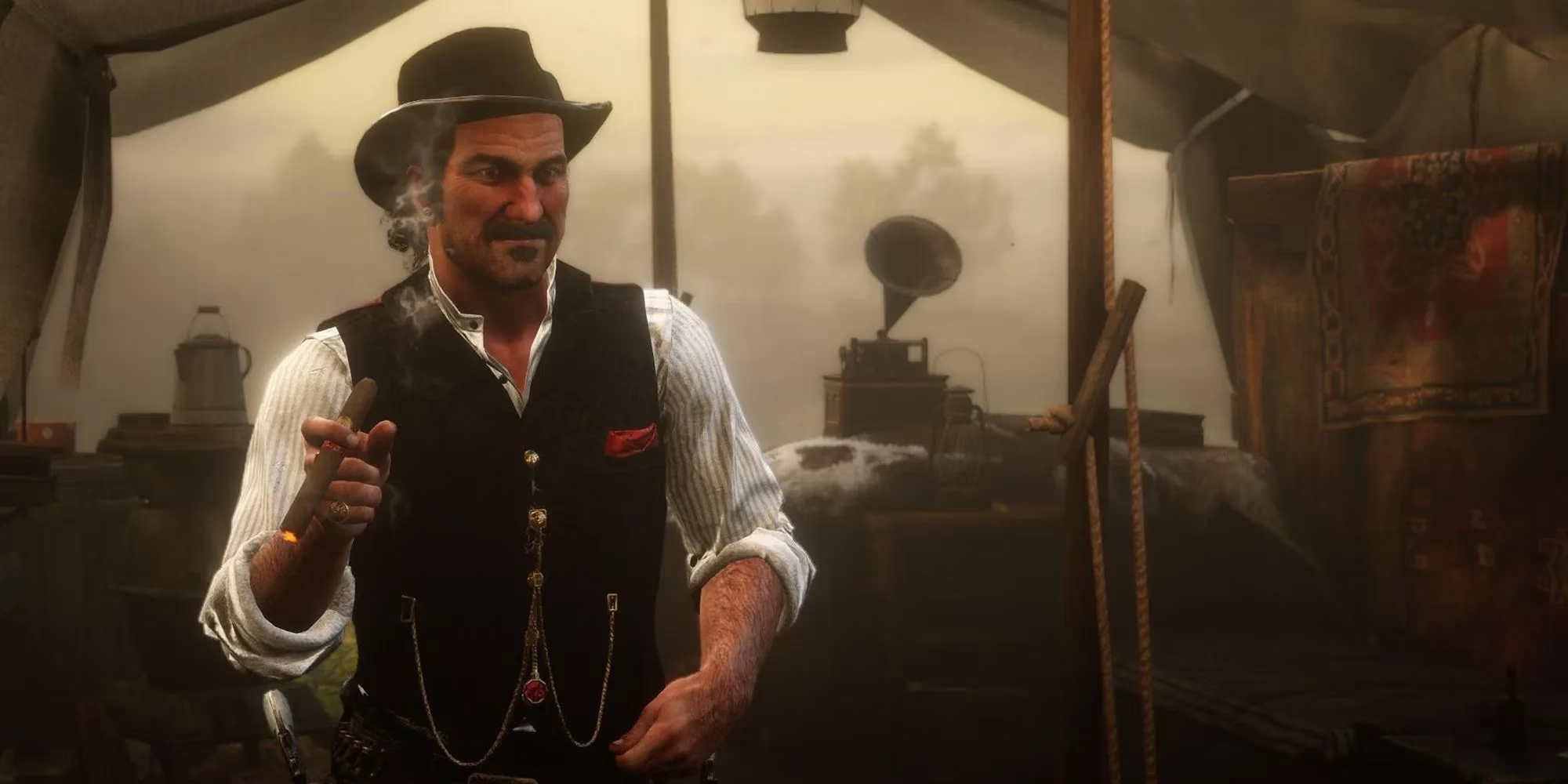
Dutch van der Linde’s descent still fascinates me. His famous line, “This world has its own natural order… and it’s our job to change it,” started as a rallying cry and ended as a madman’s justification. As a player in 2026, I see his fight against “civilization” as a chilling critique of capitalism’s soulless march—a theme that feels eerily relevant today. But the genius of the writing is that Dutch isn’t just a villain; he’s a broken idealist. Watching him twist Eagle Flies’ rebellion for his own ends, I remembered Rains Fall’s desperate plea: “Do not let them get under your skin, my son.” Eagle Flies didn’t listen, and his death became another senseless notch in a world that had no room for tradition.
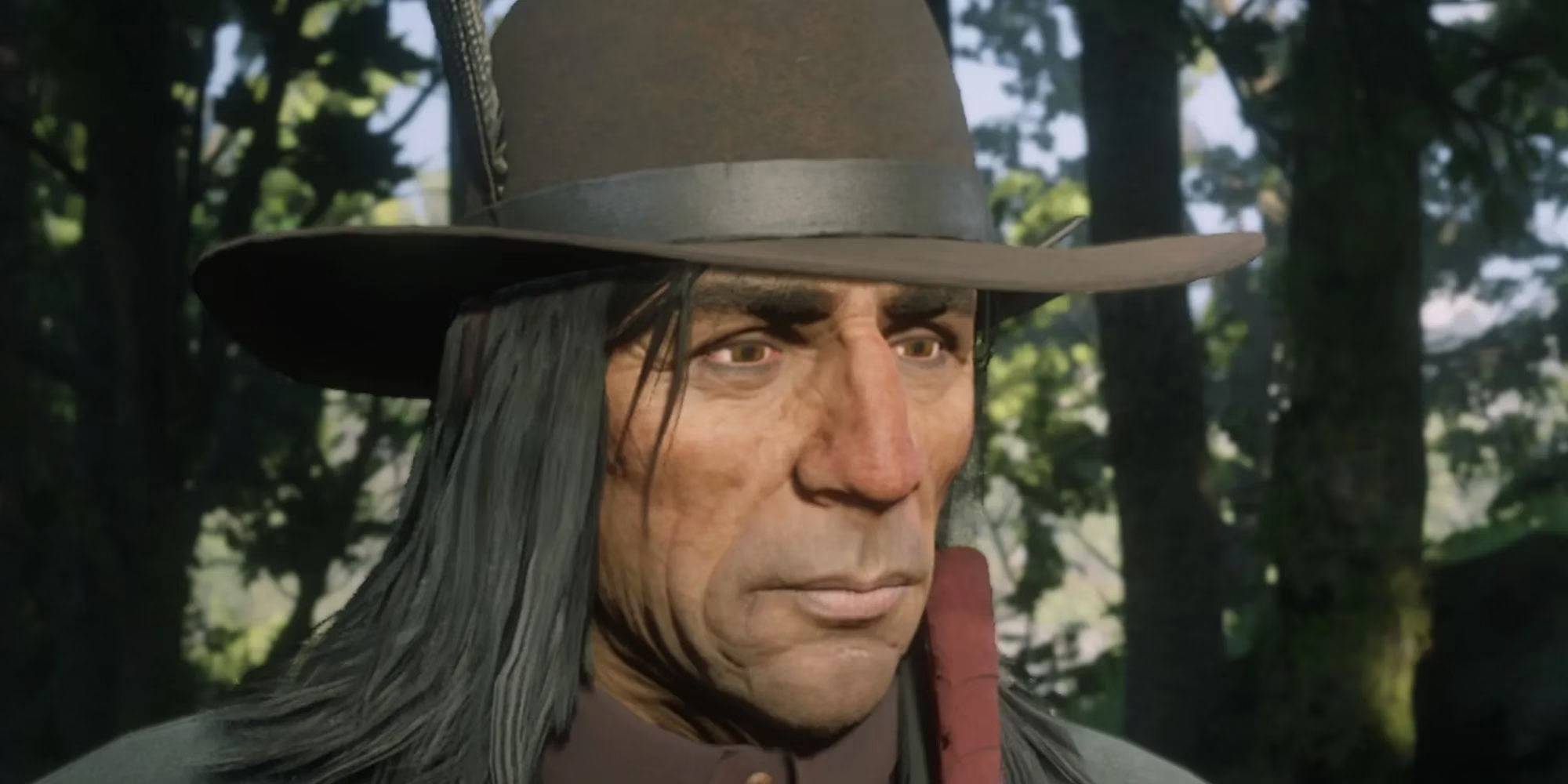
What makes these quotes so lasting is that they refuse to romanticize the outlaw life. Edgar Ross, the Pinkerton agent many love to hate, delivered one of the game’s most chilling truths: “Civilization is not about being good. It’s about being controlled.” It was a slap of realism—a reminder that law and order are just a different kind of tyranny. Even Javier Escuella’s idealistic “We are free men, not slaves to any government” became a hollow prophecy as he clung to a rotting gang. And Reverend Swanson, with all his failings, saw it when he told Arthur, “I think Javier is a lost cause.” Arthur’s reply—“We’re all lost, Reverend”—still echoes in my mind as the game’s thesis statement.
In 2026, I no longer play Red Dead Redemption just for the gunfights or the beautiful sunsets. I play it for the quiet conversations that ask uncomfortable questions: Can a bad man do good? Is freedom a lie we tell ourselves? The series didn’t just tell a story; it held up a mirror to the chaos of morality, and the reflection is as dark and compelling as ever. 🎮💀",
"title": "Why Red Dead Redemption's Darkest Dialogue Still Haunts Players in 2026