How I Prevented My Beloved Temporary Horse From Despawning in Red Dead Redemption 2’s First Stable Mission
Red Dead Redemption 2 horse ownership tips: Protect temporary horses and avoid mission despawns with precise rituals for lasting loyalty.
I remember the first time I lost a horse in Red Dead Redemption 2 — not to a hail of bullets or a cliffside stumble, but to something far more insidious: a mission trigger. It was during “Exit Pursued by a Bruised Ego,” the early hunting trip with Hosea that unlocks stables. I’d spent hours bonding with a stolen O’Driscoll horse, a muscular brute with a coat like polished obsidian. I’d named her, fed her peppermints until her bonding level soared, and hitched her at Horseshoe Overlook with all the confidence of a man who believed the game would honor his choices. When I returned from the mission, she was gone — not a trace, not a whinny. The camp felt like a tomb. That sting of loss taught me a lesson I’m still carrying into 2026: temporary horses are as fragile as a spiderweb in a thunderstorm unless you perform a precise ritual of ownership before the mission begins.
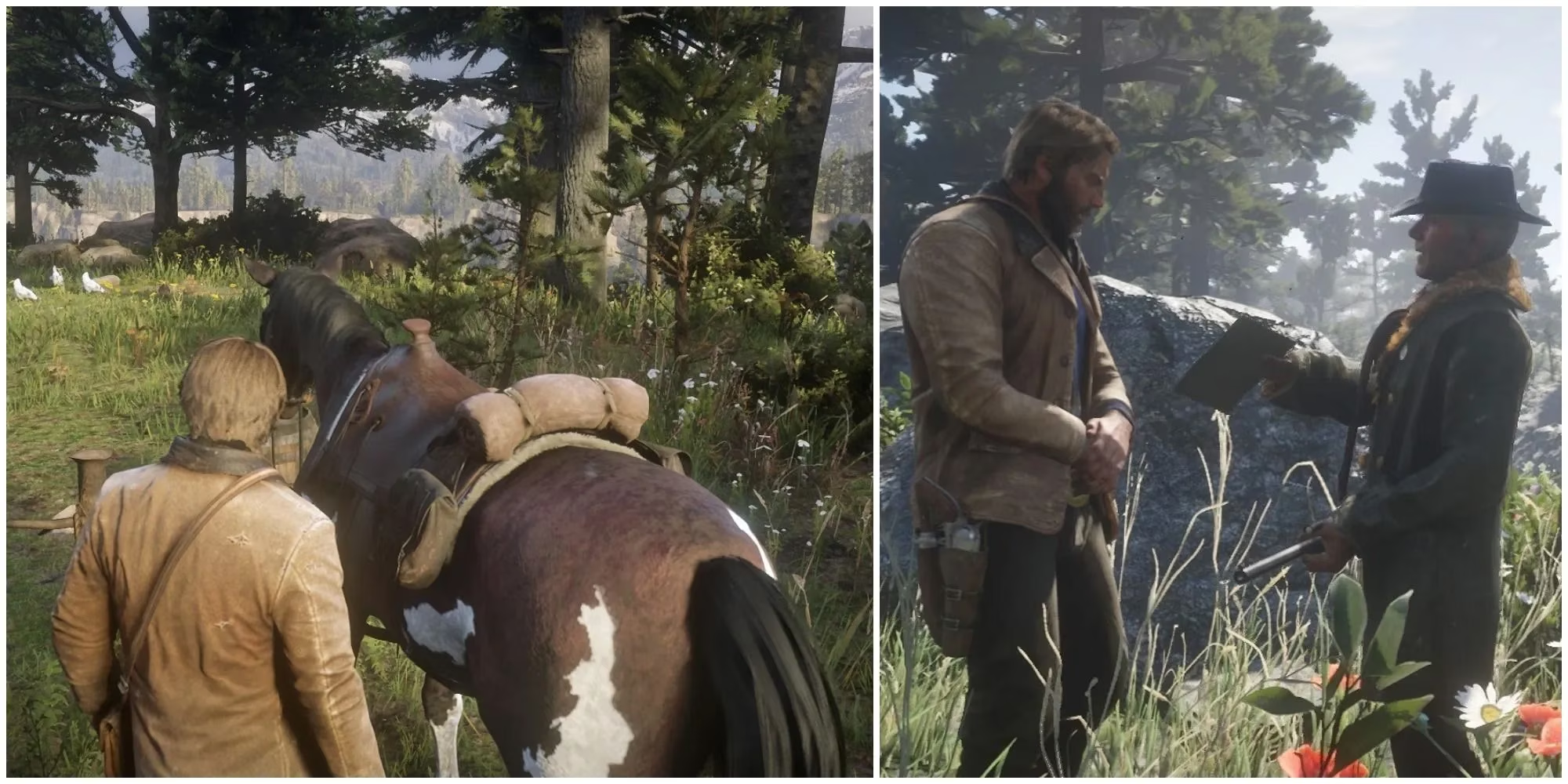
The mission itself is a rite of passage. Hosea tells Arthur they’re heading to a stable to sell a massive Shire horse and buy a new one. Unbeknownst to many players, the game’s scripting often wipes any horse that isn’t flagged as Arthur’s primary mount during the journey. Even if you hitch your temporary companion at camp with a loving pat on the neck, it can despawn like a half-remembered dream — present one moment, gone the next. I’ve tested this more times than I care to admit. Variables like bonding level, hitching status, and even the presence of a saddle seem to matter little; the game’s invisible hand simply snatches some horses and spares others. It’s a lottery, and my luck was always terrible.
The solution is brutal but necessary. To keep a temporary horse, you must kill the default Tennessee Walker, the one marked as “Arthur’s Horse.” I know, it sounds like the first act of a tragedy. But think of it as a surgical transplant of loyalty — you are not murdering a pixelated beast; you are cutting the cord that ties your identity to a mount you never wanted. The process is as stark as switching souls in a body. Here’s what I do every playthrough:
-
Lead the Tennessee Walker away from prying eyes, if only to keep my conscience a little cleaner. A remote thicket near camp works well.
-
End its life with one clean shot. The horse crumples, and for a moment, I feel like a villain in my own story.
-
Remove the saddle from the fallen horse. Red Dead Redemption 2 does not allow you to simply move a saddle from a living horse unless it’s through a stable menu — a design choice as inflexible as a rusted lock — so this grim step is mandatory.
-
Place the saddle on your preferred horse. The moment the leather settles on its back, the game rechristens your temporary companion as Arthur’s primary mount. Its name tags along, its stats become the foundation of your riding future, and the icon on the minimap turns into a solid white horse-head, the unmistakable mark of the main steed.
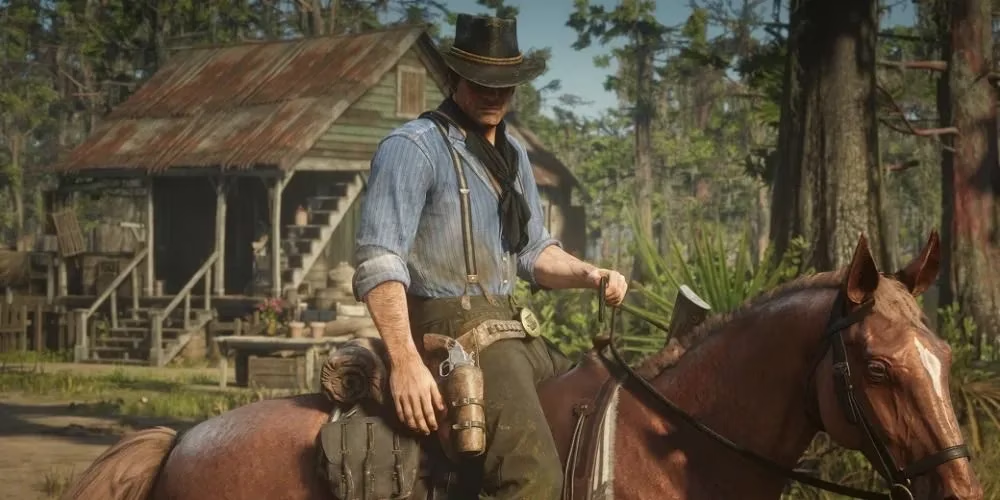
With that morbid chore complete, I speak to Hosea and begin the mission. During the ride to the stable, my new main horse will not appear on the minimap because the game expects the Tennessee Walker to be gone. This silence is reassuring, like watching a surgeon’s incision heal without infection. Once at the stable, Hosea asks me to remove my horse’s saddle and place it on the Shire he intends to sell. I comply, and for the duration of the mission, I’m riding the monstrous draft horse while my true partner waits in some digital limbo.
After the mission ends and the stable tutorial is behind me, a phantom-limb ache sets in. I ride back to camp on the newly purchased horse — or the Shire, if I chose to keep it — and find the hitching post empty. My former main horse isn’t at Horseshoe Overlook. Panic flickers, but I’ve done this dance before. The game’s logic has simply tucked my steed away in the stable storage.
To reclaim it, I ride to Valentine and enter the stable. The stable master greets me with his usual forced cheer, and I navigate to the “Manage Owned Horses” menu. There, like a ghost given flesh, sits my original horse — the one I nearly lost to a scripting quirk. Two horse slots are filled: the recently acquired mount and my resurrected companion. No despawn, no tears. I pull it out, rename it if I feel poetic, and ride into the sunset with the same rhythm of hooves I’d grown to love. The process is a reminder that Red Dead Redemption 2’s systems are a delicate ecosystem, and sometimes you must break one creature’s bones to preserve another.
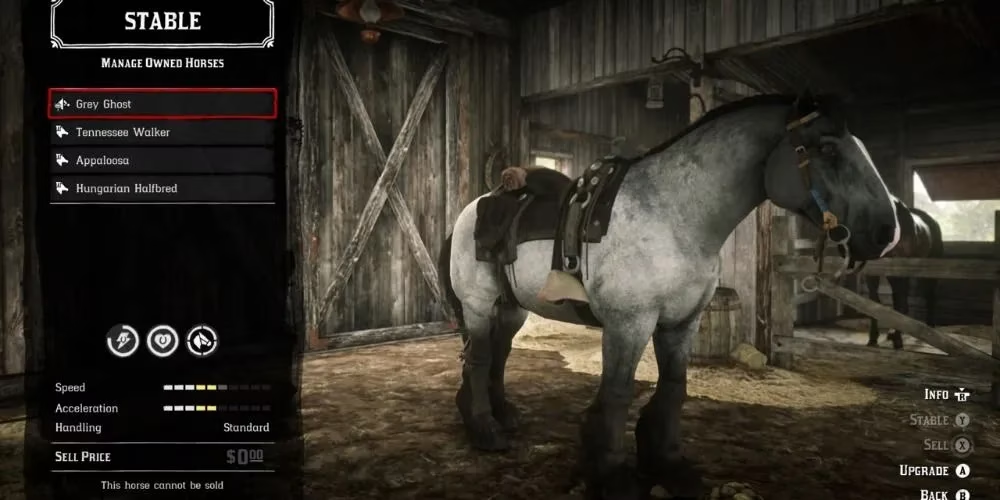
I’ve repeated this ritual across multiple playthroughs since 2018, and it remains foolproof even in 2026, long after the game’s online mode has faded into nostalgia. Some may call it cruel, but I see it as an act of preservation — a way to hold onto a horse that feels like an extension of Arthur’s soul, rather than a pack animal assigned by developers. Next time you stumble upon a Hungarian Half-bred or a sleek Arabian in the wild, don’t let a mission steal your treasure. Embrace the necessary darkness, swap the saddle, and ride with the companion you chose. The pain of the Tennessee Walker fades; the bond with your true horse endures like a scar you’re proud to wear.