From Solitude to Shared Worlds: My Journey Through Open-World Games That Mastered Multiplayer
Open-world games and multiplayer integration redefine gaming in 2026, transforming solitary adventures into unforgettable shared experiences. Discover how titles like Red Dead Redemption 2 and Ghost of Tsushima blend single-player depth with vibrant multiplayer threads for epic camaraderie.
As a longtime gamer, my relationship with open-world titles has always been deeply personal. For years, I sought solace in sprawling digital landscapes, a lone wolf exploring at my own pace. But as I reflect on the gaming landscape of 2026, I realize my most memorable adventures weren't always solitary. The games that truly stuck with me were those that managed to weave a vibrant multiplayer thread into their single-player tapestry, transforming my private playgrounds into shared experiences that felt as natural as breathing.
My journey into this hybrid world began with Red Dead Redemption 2. Arthur Morgan's story hit me like a slow-burning campfire tale—warm, crackling with detail, and ultimately leaving me with embers of melancholy. But Red Dead Online was a different beast. Sure, the content droughts felt like waiting for a stagecoach that never arrived, but those moments of riding with friends through the Grizzlies at sunset? They transformed the world from a meticulously painted diorama into a living, breathing frontier town where every saloon door could swing open to reveal a new story. It was like discovering the director's cut of a film I thought I knew by heart.
Then came Ghost of Tsushima: Legends. If the base game was a meticulously inked sumi-e painting, Legends was that same painting set ablaze with supernatural color. Tackling mythical versions of Tsushima's bamboo forests and mountain temples with three other players created a symphony of clashing steel and coordinated stealth that felt less like playing a game and more like performing in a living Kabuki theater where every enemy encounter was a choreographed dance of death. The camaraderie required to survive its tougher missions forged bonds stronger than the steel of Jin Sakai's katana.
Final Fantasy XV's Comrades mode was an experience that, for me, was like finding a secret garden hidden within a grand but slightly unkempt palace. The main journey of Noctis and his brothers had its flaws, but dropping into the multiplayer expansion felt like being handed the keys to the kingdom's back alleys and hidden larders. The combat here, against towering daemons with friends, had a weight and challenge that often surpassed the main campaign. Scavenging for resources to cook a stat-boosting meal together under the everlasting night of the Long Night created moments of quiet friendship amidst the chaos, turning a world on the brink of ruin into a surprisingly cozy apocalypse.
| Game | Multiplayer Mode | Core Experience | My Personal Rating (2026) |
|---|---|---|---|
| Red Dead Redemption 2 | Red Dead Online | Frontier Sandbox & Roleplay | ⭐⭐⭐⭐☆ |
| Ghost of Tsushima | Legends | Mythical Co-op Story Missions | ⭐⭐⭐⭐⭐ |
| Final Fantasy XV | Comrades | Post-Apocalyptic Squad Survival | ⭐⭐⭐☆☆ |
| Elden Ring | Seamless Co-op & Invasions | Challenging Shared Suffering | ⭐⭐⭐⭐☆ |
| Grand Theft Auto V | GTA Online | Chaotic Urban Sandbox | ⭐⭐⭐⭐⭐ |
| No Man's Sky | Persistent Shared Universe | Infinite Cosmic Exploration | ⭐⭐⭐⭐☆ |
| Forza Horizon 5 | Open-World Racing Lobbies | Social Competitive Racing | ⭐⭐⭐⭐☆ |
| Dying Light 2 | Seamless Co-op Campaign | Parkour Zombie Survival | ⭐⭐⭐☆☆ |
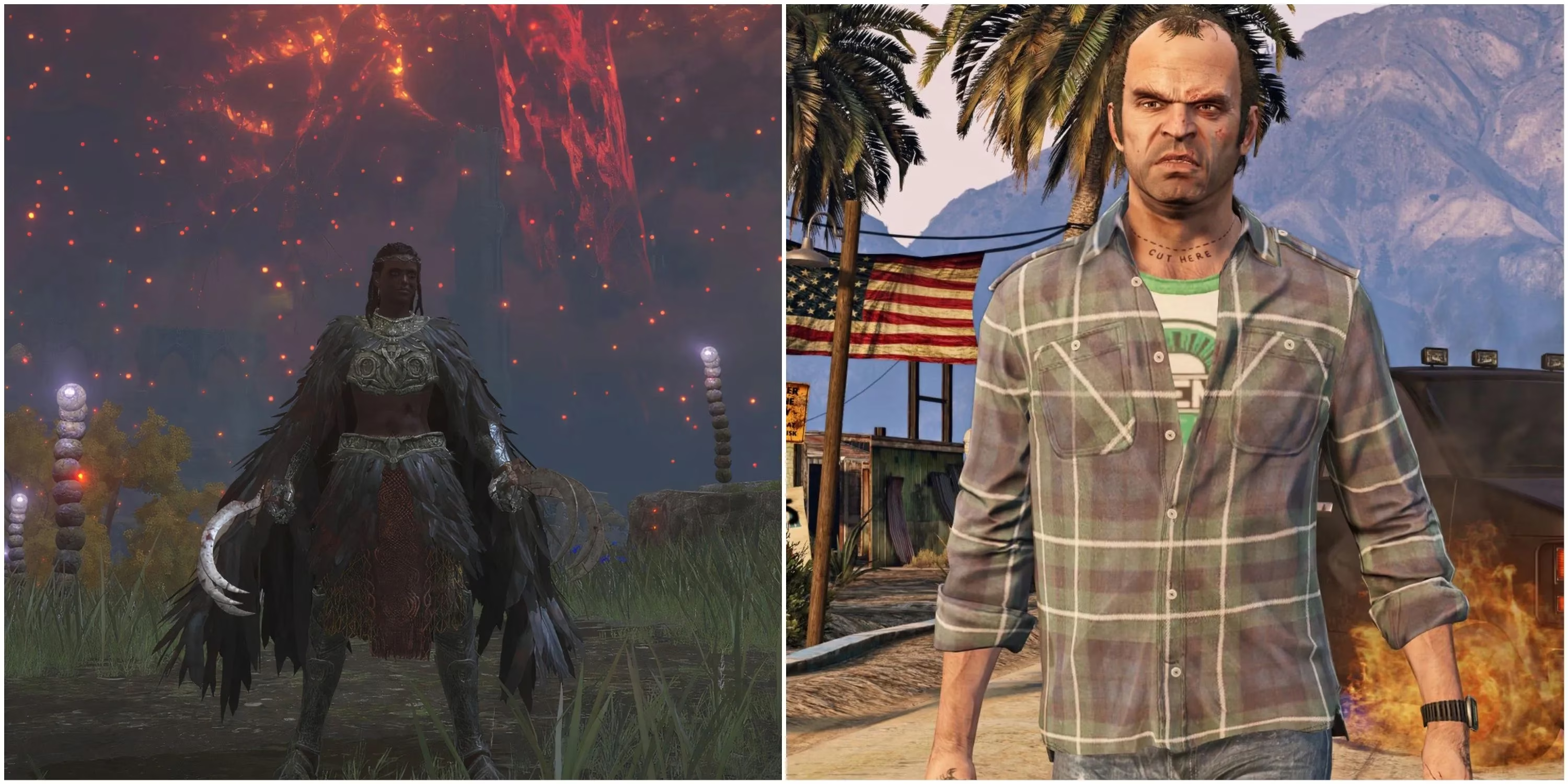
Speaking of shared suffering, Elden Ring deserves its own chapter. FromSoftware's multiplayer has always felt like communicating through a haunted, static-filled radio—clunky, mysterious, but utterly compelling. Invasions were less like hostile takeovers and more like being visited by a mischievous, and often terrifying, digital ghost. Teaming up with a friend to take down a particularly sadistic boss transformed the experience from a grim solo pilgrimage into a triumphant, laugh-filled buddy comedy about repeated death. The option to go offline was always there, a silent sanctuary, but choosing to engage with the community's hilarious message system and sudden co-op rescues made The Lands Between feel truly alive with other lost Tarnished.
The titan that reshaped the entire industry's approach, of course, was GTA Online. What started as an addendum to a masterpiece became a cultural phenomenon, a virtual Los Santos that evolved into a sprawling, self-sustaining universe. Rockstar's pivot to feed this beast was controversial, but as a player, logging in felt less like booting up a game and more like stepping into a hyper-realistic, crime-ridden theme park where every session with friends was a unique, unscripted blockbuster. It was the ultimate virtual sandbox, where we could be movie directors, stunt drivers, and criminal masterminds all in one afternoon.
Then there's the greatest redemption arc in gaming: No Man's Sky. Its launch was a promise whispered into a cosmic void that echoed back as silence. But by 2026, it has become something else entirely—a serene, almost meditative shared universe. Exploring a newly discovered planet with a friend, building a base on a floating rock, and watching twin suns set over an alien ocean is an experience of quiet wonder. The multiplayer here isn't about competition; it's about shared discovery, a feeling of being intergalactic pen pals charting the infinite together. Its evolution is a testament to the power of persistence, turning a lonely universe into a welcoming one.
For pure, unadulterated fun, Forza Horizon 5's Mexico remains unmatched. The single-player festival is a vibrant celebration of car culture, but slipping into a multiplayer lobby transforms the beautiful open world into a buzzing social hub. A casual cruise could suddenly erupt into an impromptu street race; a photo op at a volcano could turn into a convoy of a dozen players. The seamless integration makes the world feel populated by real people sharing the same love for the open road and a perfectly tuned engine. It’s the digital equivalent of a never-ending, global car meet.
Finally, Dying Light 2 took the nighttime terror of its predecessor and made it a social affair. Parkouring across the decaying rooftops of Villedor is fun alone, but doing it with a friend, coordinating dropkicks on unsuspecting zombies and watching each other's backs during a frantic nighttime chase, turns survival horror into a gleeful, acrobatic power fantasy. The choice-consequence system even carries over, making our co-op decisions feel weighty and shared.
Looking back, the magic of these games isn't just that they have multiplayer; it's that their multiplayer modes feel like natural extensions of their worlds. They aren't just tacked-on arenas or competitive ladders. They are alternate dimensions of the same space—the rowdy saloon hidden behind the story's lonesome campfire, the mythical realm lurking beneath the historical drama, the friend's passenger seat in a cross-country road trip. In 2026, the best open worlds aren't just places I visit; they are places I live in, and the most memorable ones are those where I can leave the door unlocked, knowing a friend might just drop by to share the view.