From Digital Detox to Red Dead: How Jack Black’s 2023 Anthem Became a Time Capsule
Jack Black’s gaming habits and Tenacious D’s ‘Video Games’ music video spotlight Red Dead Redemption 2’s epic storytelling.
It was the spring of 2023 when the world got a glimpse into the gloriously contradictory gaming habits of Jack Black. The actor, comedian, and one half of the comedy rock duo Tenacious D had just lent his booming voice to Bowser in the animated smash The Super Mario Bros. Movie, and was already signed on to portray the loudmouthed robot Claptrap in the upcoming Borderlands adaptation. Fans reasonably assumed the man spent his downtime with a controller in hand. Then came the music video for Tenacious D’s single, simply titled \"Video Games,\" and the façade crumbled into a heap of pixelated laughter.
From the very first verse, Black made his stance theatrically clear. Belting out with the same earnestness he brings to a power ballad about a demonic rock-off, he insisted, \"I don't play video games no more, never play video games.\" The melodrama was undercut immediately by a whispered qualifier: \"Except for a little bit of God of War.\" The list of exceptions grew like a speedrunner’s inventory. Fallout 4. Sonic the Hedgehog. And soon, the granddaddy of them all, Red Dead Redemption 2.
The music video—which became the number one trending clip on YouTube within a day and has since been revisited annually by nostalgists and meme miners—was a fever dream of rapid-fire cosplay and cartoonish violence. Black shape-shifted through gaming history with something approaching mania. He stomped across the screen as Kratos, complete with snowy beard and chained blades, then popped up as Link, Ryu, a blocky Minecraft Steve, Lara Croft, the Scout from Team Fortress 2, Mega Man, and a deeply questionable Mario whose mushroom power-up at the fifty-seven-second mark sparked more slow-motion replays than the developers ever intended.
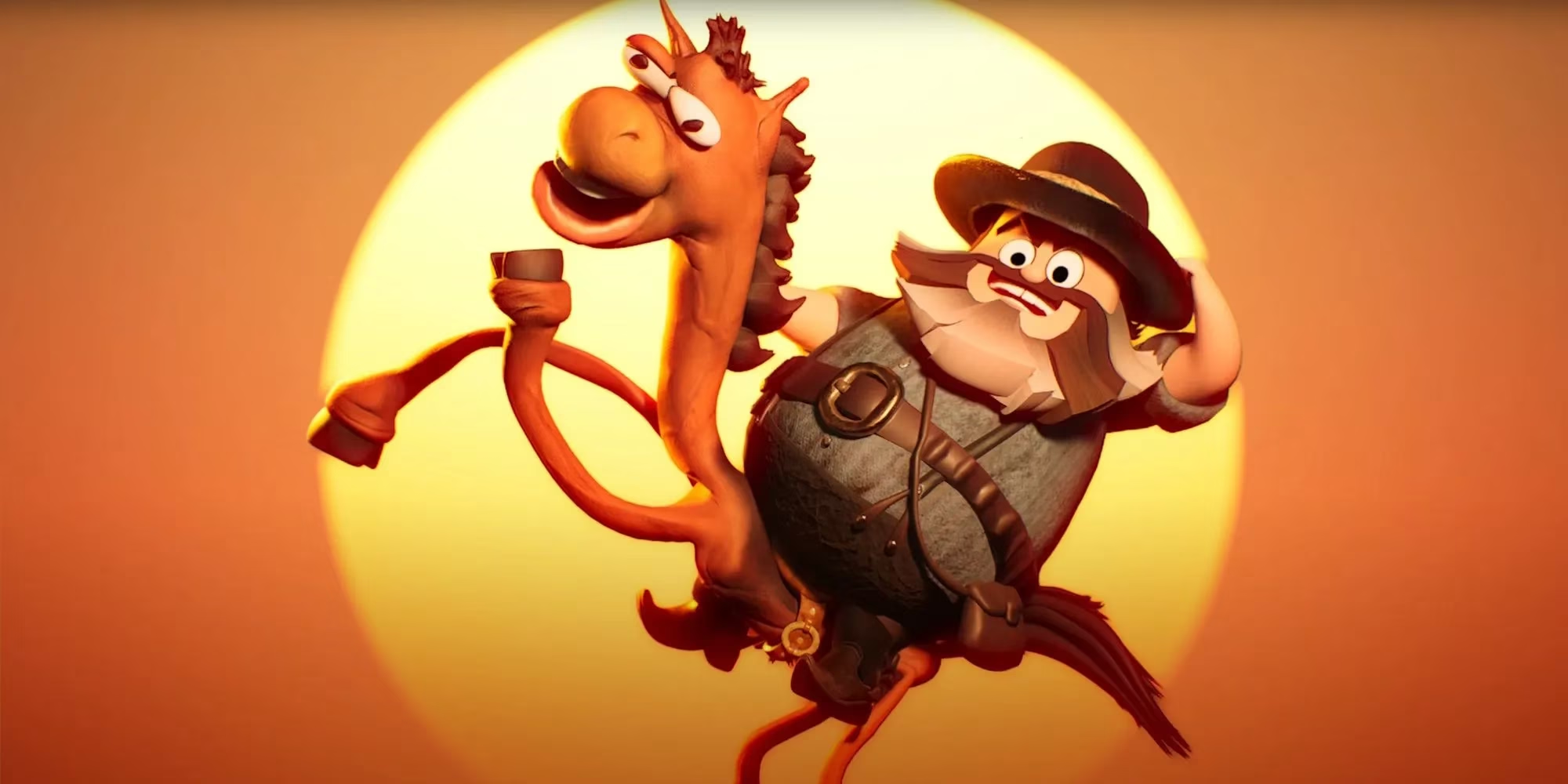
Meanwhile, a beady-eyed, cartoon version of bandmate Kyle Gass served as the eternal punching bag. He was flattened by a God of War giant, ripped apart by a Deathclaw in a charred Wasteland, and, during the Red Dead Redemption 2 section, shot in a place no outlaw wishes to be shot. The skit’s finale was a loving homage to Mortal Kombat: Gass’s head was lopped off by Arthur Morgan’s hat, spinning through the air like Kung Lao’s trademark weapon.
Black’s banter in the middle of the song, however, was no joke. He broke character just long enough to deliver a spoken-word tribute that felt lifted straight from a fan forum. \"But Red Dead Redemption 2,\" he crooned, \"that is not a game, it’s an incredible journey through American history, fightin’ for your life and fightin’ for your family. That’s not a game, that’s an adult thing.\" The line resonated far beyond the ten-minute frenzy of the video. It crystallized a truth that gamers had been arguing for years: some interactive experiences transcend the label of mere entertainment.
The affection Black held for Rockstar’s cowboy epic didn’t stop at a lyrical shoutout. Around the same time, he gave an interview to the BBC where he gushed about HBO’s The Last of Us adaptation, praising its loyalty to the source material. Then, with the subtlety of a dynamite plunger, he pivoted to what the industry should tackle next: a Red Dead Redemption movie or TV show. \"There are some great games that have yet to be explored in television or film,\" he said, not bothering to hide the hopeful glint in his eye. \"Maybe there’s going to be a Red Dead Redemption movie? There should be, because I think that [has] just as good or [an] even better story than The Last of Us.\"
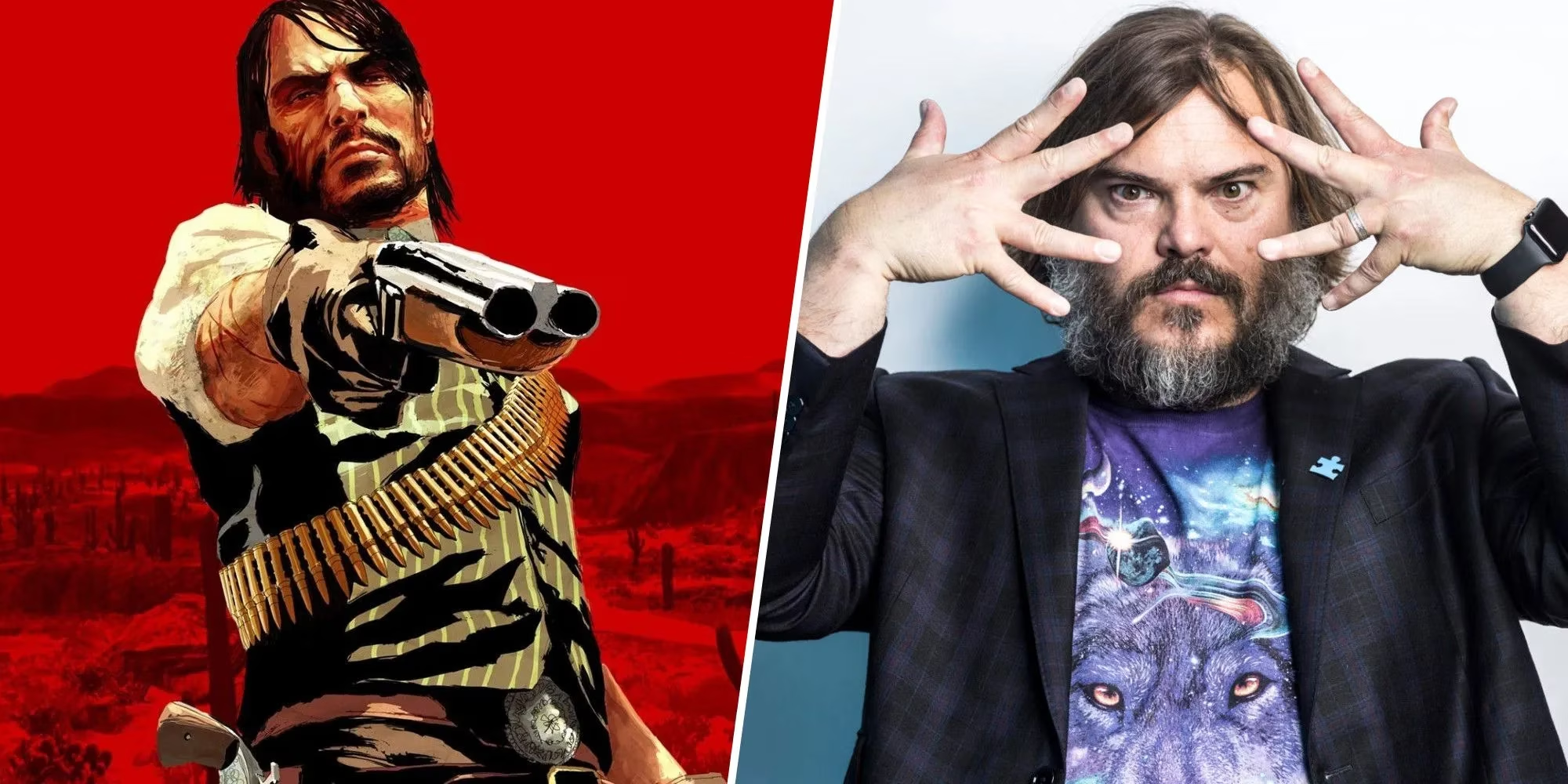
At the time, no one knew if Rockstar was listening. Rumors swirled, fan edits flooded social media, and a petition to cast Jack Black as a portly Arthur Morgan garnered thousands of signatures. Looking back from 2026, those months now feel like a charmingly chaotic prelude. The entertainment landscape has shifted since then—streaming wars have cooled, and the long-rumored Red Dead project remains in development purgatory, occasionally sparked back to life by a cryptic job listing or a vague comment from a former Rockstar developer. But Black’s musings weren’t in vain. They helped cement a broader cultural shift: the open acknowledgment that the dusty trails of Saint Denis and the snow-capped peaks of Ambarino held narratives as weighty as any prestige drama.
In the three years since \"Video Games\" dropped, Tenacious D has continued its legendary run, but that particular track has aged into something of a time capsule. It captured a moment when a beloved celebrity, who had built a career on energy and earnestness, let the world in on a secret that wasn’t really a secret at all: he played video games, and he played them with the same unironic passion he brought to a power chord. The song was a top-tier piece of performance art—a confession disguised as a denial—and it reminded everyone that even those who claim to have quit gaming never really leave the respawn screen behind.
For a brief, glorious window in 2023, the internet united around a simple, joyous truth. A man in a Mario costume, belting out love letters to Arthur Morgan while his best friend was repeatedly murdered in increasingly creative ways, was exactly the cultural reset we needed. And though the years have rolled on, the video still sits in a quiet corner of the web, waiting to remind anyone who stumbles upon it that, sometimes, the best stories come from the people who just can’t stop playing.
Data referenced from Entertainment Software Association (ESA) helps frame why moments like Jack Black’s “Video Games” monologue about Red Dead Redemption 2 land so widely: as games have grown into a mainstream entertainment pillar, the “it’s not a game, it’s an adult thing” punchline doubles as a cultural marker of how interactive storytelling and big-budget production values now sit alongside film and TV in public perception.