Balancing Justice: How Red Dead Redemption 3 Could Revolutionize the Wanted System
Discover how Rockstar balances realism and gameplay in Red Dead Redemption's law enforcement system to enhance immersion and authenticity in the Wild West setting.
The Wild West fantasy in Rockstar's acclaimed series faces a persistent challenge: creating a law enforcement system that feels authentic without breaking immersion. Both previous Red Dead Redemption titles stumbled in their approaches - RDR2's hyper-vigilant lawmen contrasted sharply with RDR1's nearly absent consequences. As fans eagerly await the next installment in 2025, finding that sweet spot between realism and gameplay freedom remains crucial for delivering an authentic outlaw experience without frustrating players. The solution likely lies in dynamic systems that account for location, witness behavior, and gradual reputation buildup rather than instant omnipotent law enforcement.
RDR2's Overzealous Law Enforcement
The sophomore installment cranked up law enforcement to near-absurd levels where witnesses materialized like clockwork even in remote wilderness areas. Masks became virtually useless as lawmen developed supernatural identification abilities. Train robberies epitomized the unfairness - officers would immediately pinpoint Arthur's location regardless of planning or remoteness. This created ludonarrative dissonance in a setting where historical records show law enforcement was sparse and reaction times measured in days. Players constantly felt like they were in a fishbowl where every pebble thrown attracted sharks.

Key frustrations included:
-
🎭 Witnesses spawning unrealistically during isolated crimes
-
🔍 Instant recognition despite disguises or facial coverings
-
🚂 Magical lawman telepathy during train heists
-
⚖️ Honor system penalties compounding the punishment
RDR1's Unforgivably Lenient Approach
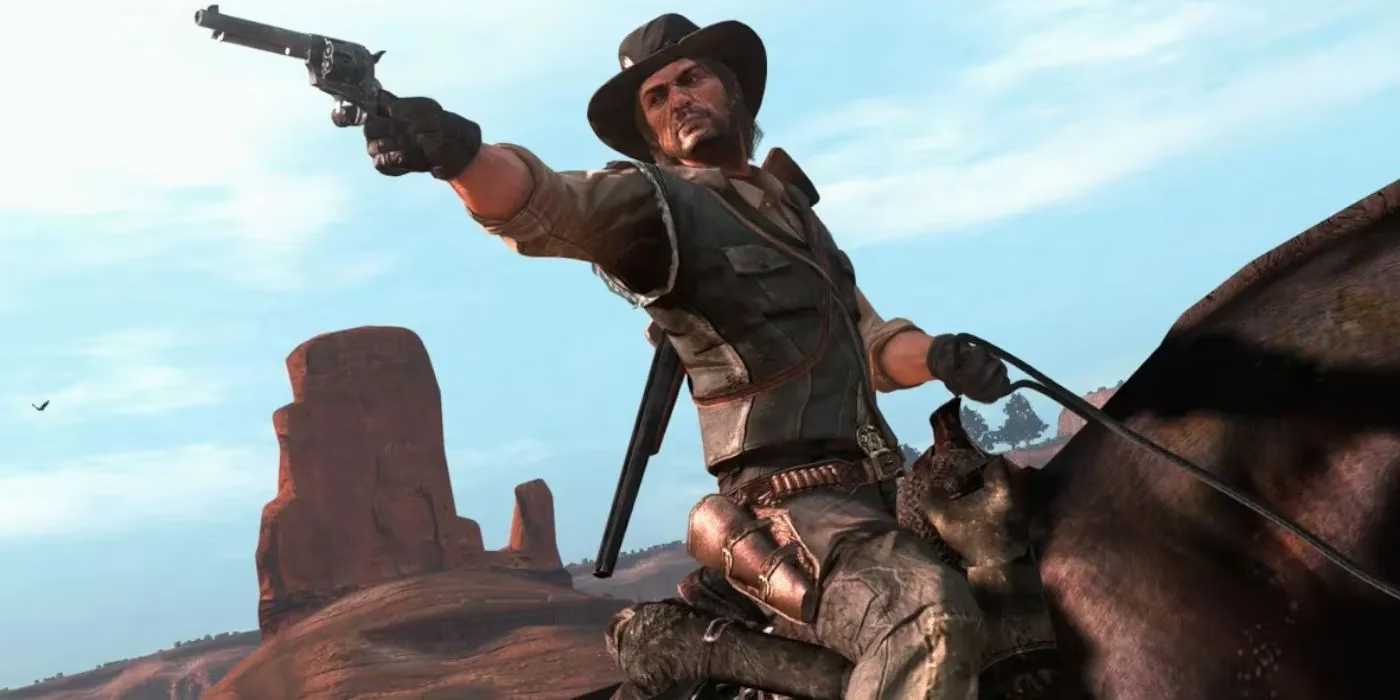
On the flip side, the original game swung too far toward lawless freedom. John Marston could literally get away with murder in broad daylight with minimal consequences. The system was so forgiving that players could kidnap townsfolk or start saloon brawls without attracting meaningful attention. This laissez-faire approach undermined the Western power fantasy - what's the point of being an outlaw if there's no law to outrun? The thrill of criminal activity evaporated when the game basically gave you a permanent "get out of jail free" card.
People Also Ask
Why do players care about realistic law systems?
It's about immersion - when consequences align with expectations, the world feels alive. Unrealistic systems constantly remind players they're in a video game.
How does this affect gameplay?
Overly punitive systems discourage experimentation, while lenient ones remove stakes. A balanced approach encourages strategic crime.
What historical factors should influence RDR3?
Actual 1890s law enforcement had limited communication, slow response times, and spotty record-keeping - perfect for gameplay implementation.
The Goldilocks Solution for RDR3
Imagine a system where witness reliability depends on location and circumstances. Isolated crimes with no survivors? The law arrives clueless days later with only vague descriptions. But botch a bank job in Saint Denis? Better high-tail it outta there before the telegraph spreads your description statewide. The key is graduated consequences and delayed reactions that respect geography and technology limitations of the era.

Potential improvements could include:
| Feature | Current System | Ideal RDR3 Implementation |
|---|---|---|
| Witness Reliability | Always perfect recall | Varies by distance/lighting/stress |
| Bounty Activation | Instant telepathic alerts | Telegraph delays + rider dissemination |
| Disguise Effectiveness | Basically useless | Actually works unless notoriety is high |
| Remote Crimes | Always witnessed | Truly isolated actions stay hidden |
Implementing a notoriety scale would be the cherry on top - minor infractions might go unnoticed, but frequent offenders would become infamous. Lawmen in neighboring territories would eventually recognize your modus operandi, making disguises less effective over time. This creates natural progression where early mistakes don't ruin the game, but serial lawbreaking has compounding consequences. Train robberies could trigger multi-stage investigations instead of instant pursuit, letting players actually plan their getaway rather than fighting waves of teleporting lawmen.
FAQ
🤔 Could RDR3 implement regional notoriety?
Absolutely! Different territories remembering your crimes separately would add strategic depth - laying low in one region after causing mayhem elsewhere.
⏱️ How might delayed bounty systems work?
Crimes could trigger investigation timelines - witnesses might take 48 in-game hours to reach a sheriff, giving players crucial escape time.
🎭 Would disguises actually function in RDR3?
Ideally yes, with effectiveness tied to notoriety levels and facial coverage - bandanas working for minor crimes but failing against seasoned bounty hunters.
🔫 How could train robberies become fair?
By eliminating psychic lawmen - officers should only arrive if the train passes a populated area or the crew sends distress signals.
⚖️ Could honor affect law enforcement?
Potentially! High-honor characters might get benefit of the doubt, while notorious outlaws face shoot-first policies.